Sweet • Sour • Savory

Food blog on scandinavian style food done right.

Brunch,Appetizer

Surbrød - Bread with Caraway Seeds

Bread, Breakfast, BrunchTove Balle-Pedersen2 Comments
Surbrød - Bread with Caraway Seeds

Surbrød - Bread with Caraway Seeds

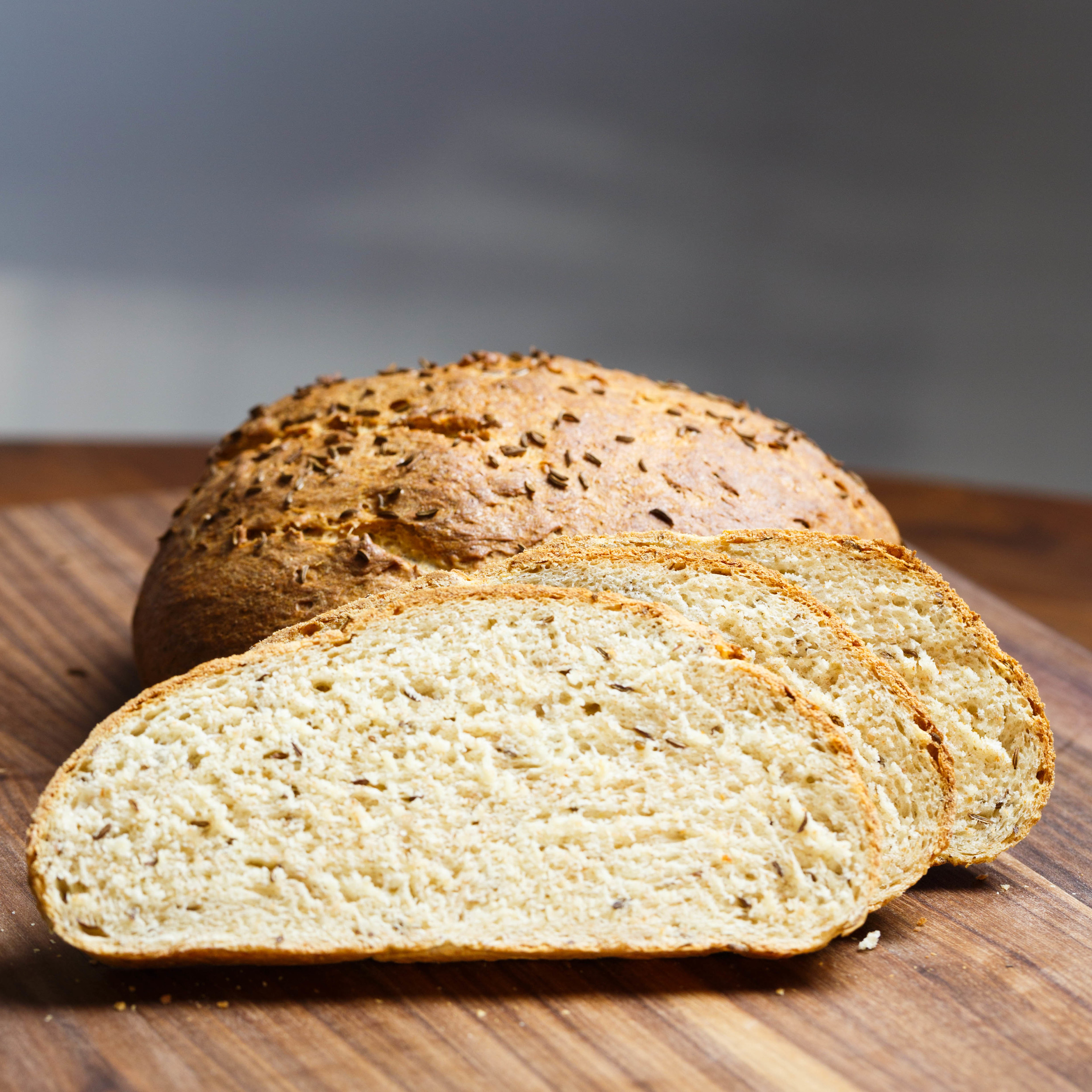
Surbrød is traditionally used for gravid lax, smoked salmon or open-faced shrimp sandwiches. Surbrød means sour bread, even though it's not made with a sourdough, at least nowadays. A surbrød is a white bread, with a small amount of rye flour and caraway seeds. In my family we rarely had surbrød, only my mom liked it. 

I think it was normal not having surbrød. I had an after-school job at a bakers shop and we didn't sell a lot of surbrød. And most of all it was bought by old ladies. Now, and in the last few years, I actually like bread with caraway seeds, like my soft pretzels - kommenskringler. Does that makes me an old lady, well, I hope not. 😳

The recipe calls for "sigtemel" which is a sifted flour made from 30% rye and 70% wheat, so I made some adjustments to the recipe. Normally you will use buttermilk, but I used whole milk, a splash of lemon juice and a tablespoon of plain yoghurt.

Ingredients:

  • 400 g all-purpose flour
  • 105 g dark rye flour, sifted
  • 35 live yeast (1 pack (7 g) fleischmann's active dry yeast)
  • 2 tablespoons (15 g) caraway seeds + some for sprinkles
  • 12 g salt 
  • 1 tablespoon honey
  • 2 teaspoons sugar
  • 300 ml whole milk 
  • a splash lemon juice
  • 1 tablespoon plain yoghurt
  • 1 tablespoon butter, room temperature

Directions:

Warm up the milk, and dissolve the yeast in the milk. If you use dry yeast add a few pinches of sugar. 

Mix flours, caraway seeds, salt honey and sugar. Pour in the milk/yeast mixture and add the butter, and mix it to an elastic soft dough. Let the dough rise for about 30 minutes in a warm spot.

Knead the dough for a few minutes, and divide the dough in two round balls. Set to rise for 30 minutes.

Preheat oven to 400℉ (200℃).

Brush the breads with milk and sprinkle with caraway seeds. Score the breads with a sharp knife or cut with scissors.

Bake breads for 30-40 minutes. Let cool on a wire rack.

Enjoy bread with butter,  with your favorite cheese or with gravad lax.

Gravad Lax - Gravlax with Mustard Sauce (Rævesauce)

Appetizer, Fish & seafood, LunchTove Balle-Pedersen2 Comments
Gravad Lax - Gravlax with Mustard Sauce (Rævesauce)

Gravad Lax - Gravlax with Mustard Sauce (Rævesauce)

Gravad lax, gravad laks or gravlax is a dill-cured salmon, normally served with a mustard sauce. Gravad lax means buried salmon, referring to back in  the old days, where the fishermen cured the fish and buried it in the ground for a few days. Now you would never put the fish in the ground when you have the refrigerator. 

Gravad lax is one big favorite in my house, if you ask my husband IT IS the favorite, when it comes to fish cold cuts, way better than smoked salmon. Gravad lax is perfect for appetizer, for small Hors d'oeuvre or on an open-faced sandwich on rye bread. The sweet salty salmon almost melt in your mouth, and with the mustard sauce, it's a little slice of heaven.

Eating Raw Seafood - What You Need To Know:

It's always best to cook seafood thoroughly to minimize the risk of food-borne illness. However, if you choose to eat raw fish anyway, one rule of thumb is to eat fish that has been previously frozen for 24 hours. FDA

Ingredients:

  • 750 g (26 oz) fresh salmon filet with skin on

  • 3 tablespoons sugar

  • 2 tablespoons salt

  • 2 teaspoons crushed white pepper

  • 2 bunches dill, chopped

Directions:

To minimise the risk connected with eating raw fish, you should freeze the salmon before preparing it. When defrosted, scale the salmon and remove all small bones, but leave the skin on.

Mix salt, sugar and pepper and sprinkle it all over the salmon, cut the salmon in half. In the dish you are going to marinate the salmon in, sprinkle a good layer of dill, place the one piece of salmon, skin side down. Sprinkle a thick layer of dill on that, and place the second half on top sin side up. Sprinkle the rest of the dill on top. Put some plastic wrap over the salmon and use a weighted cutting board to press on the salmon. Refrigerate for 24−48 hours, turning the salmon filet a few times. Rinse the salmon in cold water, and pad it dry. 

Use a sharp knife to cut the gravad lax. (Filet knives, boning knives, and Japanese sashimi knives work well for this role.) The gravad lax should be sliced paper-thinly at an angle (15-20 degree angle), making sure not to get any skin on the slices. 

Serve the gravad lax on a slice good bread, with a mustard sauce.


Mustard sauce - Rævesauce

Ingredients:

  • 6 tablespoons brown sugar

  • 2 tablespoons Dijon mustard

  • 2 tablespoons white wine vinegar

  • 8 tablespoons oil (use a neutral oil - not olive oil)

  • dill, finely chopped

  • salt & pepper to taste

Direction:

Whisk sugar, mustard and vinegar together and add the oil in a thin stream to make the emulsion. Stir in the dill and season with salt and pepper to taste.

Gulerodsbrud - Carrot Rolls

Bread, Breakfast, BrunchTove Balle-PedersenComment
Gulerodsbrud - Carrot Rolls

Gulerodsbrud - Carrot Rolls

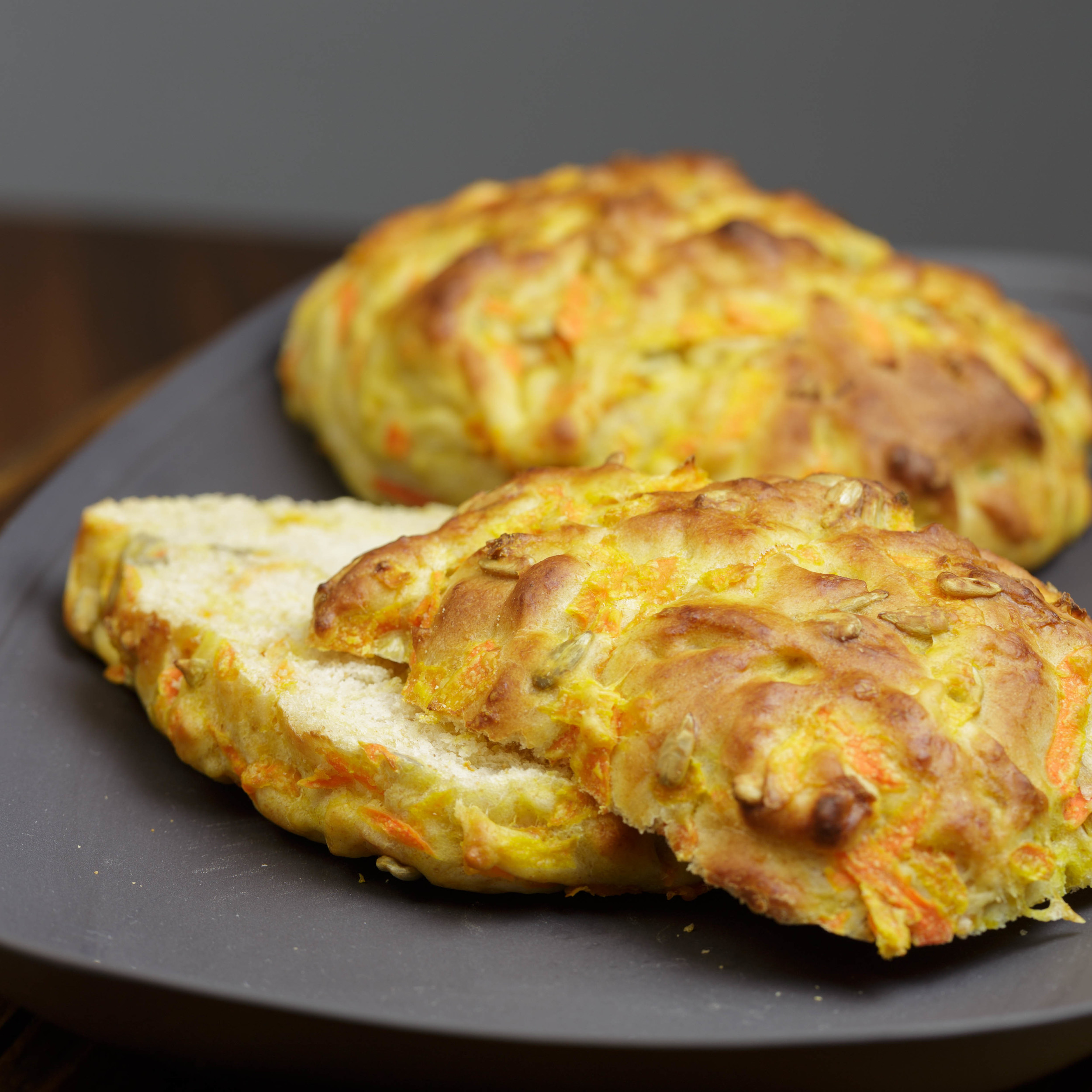
These rolls are so good and delicious. The carrots and sunflower seeds elevates this otherwise ordinary roll to an interesting and delicious treat. I first made these in 2009, when I found the recipe on the Danish Food blog "Newyorkerbyheart", and they have been some of my go-to recipes for rolls for brunch. Originally the recipe is from Claus Meyers “bagebog" - a book with a lot of basic recipes, a book I'm trying to "bake" my way through.

Gulerodsbrud is best the day you bake them, but I like them slightly toasted, or reheated in the oven. Just spread on some butter, a good cheese or my favorite right now, gooseberry jam. 

This time I added some whole wheat flour (20%) to change it up a bit. Next time I'll add a larger percentage, because it was still white rolls, and I was aiming for a healthier bread.

Makes 12 big rolls

Ingredients:

  • 50 g live yeast (I used 2 packs fleischmann's active dry yeast)

  • 500 ml warm water

  • 800 g all-purpose flour

  • 200 g whole wheat flour

  • 75 g sugar

  • 15 g sea salt

  • 75 g butter, room temperature

  • 2 eggs

  • 150 g sunflower seeds (I only had 122 g - but I worked fine anyway)

  • 4 carrots, peeled and grated

Directions:

In a large bowl mix warm water 105-110℉ (40-45℃) sugar and yeast. If you use dry yeast, wait until it starts foaming, before adding anything else.

Mix in salt and the flour’s until combined. Add butter and kneed the dough until it’s smooth and elastic, 6-8 minutes if kneading by hand. (I kneaded the dough on the kitchen counter, to better stretch the dough.) Cover the dough with a dish towel and allow dough to rise for about one hour.

Line 2 baking sheets with parchment paper and set aside. 

Make a well in the center of the dough and pour in the cracked eggs, sunflower seeds and grated carrots into the well. Close the dough over the filled well by pulling the dough edges over the well. 

Using a dough scraper, or a large knife, cut up the dough into pieces to mix in the filling. Keep doing this, making sure to scrape the filling into the dough, until you have mixed in the filling. This is a very messy process, but it is worth it in the end. The dough won’t be uniform, but It doesn’t matter, the rolls will also be uneven in shape, but they are really good anyway.

Divide the dough in 12 pieces and place the sticky dough onto the baking sheets. Let the rolls rise for about one hour. 

Preheat oven to 430℉ (220℃). 

Bake the gulerodsbrud fort about 15 minutes or until golden. Let cool completely on a wire rack before serving.

Enjoy.

Shrimp cocktail - the 80's are calling

Appetizer, Fish & seafoodTove Balle-Pedersen2 Comments
Shrimp cocktail - the 80's are calling

Shrimp cocktail - the 80's are calling

Shrimp cocktail might be the only seafood appetizer of the 80’s. We had it in a martini glass or in an avocado. It was everywhere, at every party and special occasion. The only excitement was whether you got the avocado in your lap or not. 😀

But to be honest I liked the shrimp cocktail of the 80's, greens, shrimps and a thousand island dressing. If it could be a little lighter, the shrimp cocktail would be perfect, as the flavors are so good.

Last week I was going through some of my cookbooks, and I read Claus Meyers updated version of the shrimp cocktail. (From the book Salatværkstedet). I used this recipe as my inspiration. I used my own version of thousand island dressing, another kind of salad and bread, otherwise I leaned against Meyer's recipe.

I use cold water shrimps because they have more flavor than warm water shrimps.

Serves 3-4

Ingredients

Shrimp cocktail

  • 275 g cold water shrimps (I used shrimps from IKEA)
  • 12 green asparagus
  • 3 slices sourdough bread, cut into logs
  • 2 small lemons, zest and fillets
  • 10 leaves of romaine lettuces
  • dill
  • extra virgin olive oil
  • salt & pepper

Thousand island

  • 1 cup (240 ml) sour cream
  • 2 tablespoons mayonnaise
  • 6 small sun-dried tomatoes
  • ¼ cup (½ dl) tomato ketchup
  • 1 teaspoon paprika
  • ¼ teaspoon chili powder
  • 1 garlic clove
  • 1 tablespoon worcestershire sauce
  • ½ tablespoon lemon juice
  • salt & pepper to taste

Directions

Thousand Island dressing

Blend tomato and ketchup together. Mix all the ingredients in a bowl and season to taste. Set aside.

Shrimp cocktail

Heat olive oil in a skillet, and toast the bread logs in the oil. When they get a nice color, place them on a piece of kitchen towel, to remove any excess oil. Sprinkle with salt.

Wash the asparagus and snap the dry stem ends off of each asparagus. Use the same skillet to roast the asparagus for about 2 minutes. The asparagus should be cooked, but still have a bite. Cut the asparagus into bite size pieces, save some bigger pieces and the heads for garnish. Set aside.

Using a lemon zester, make strips of lemon zest, bring these to a boil in some salted water. Leave the zest in the water until you need to use them.

Fillet the lemons with a sharp knife. Cut the top and bottom off the lemon. Set your knife where the white meets the flesh and start cutting downward in a curved motion following the shape of the lemon. Keep doing this until you have peeled the lemon. Carefully cut the filets out.

Chop the romaine lettuce finely, leave out the core part. Mix the romaine, dild, asparagus, lemon-zest and -fillets. Dress the salad with a splash of olive oil.

Assembly

Serve the shrimp cocktail in a maison jar or another rustic glass, to set it aside from the shrimp cocktails of the 80's.

Layer the cocktail: salad, shrimps and dressing. Layer until you have a nice serving size. Garnish with bread logs, asparagus and dild.

Enjoy.

English Muffins

Bread, Breakfast, BrunchTove Balle-PedersenComment
English Muffins

English Muffins

Have you ever had a real English muffin, not the ones you bye at the grocery store, but one made at a bakery? The light, crunchy, soft, delicate, lightly sour muffin is a little slice of heaven. We went to Napa for a weekend and ended up at Model Bakery for english muffins. This visit ruined it for me, now I'm craving these tasty treats, and will never be satisfied with the store bought kind ever again.

I really didn't know anything about english muffins. But reading up on the history the english muffins are based on the recipe for classic english crumpets. Both crumpets and english muffins are originally made in a cast-iron skillet on the stovetop, are generally the same size and are  eaten for breakfast or tea.

According to the nibble "The English muffin, first called a “toaster crumpet,” was invented in 1894 by a British immigrant to New York, Samuel Bath Thomas. Immediately embraced as a more elegant alternative to toast, it was served at fine hotels and ultimately became a mainstay of American breakfast cuisine."

When you talk about english muffin, you will always hear the term "nook and crannies." The nooks and crannies are the little holes made from the gluten structure in the bread, they help catch the spread you put on, wether it's butter, lemon curd or even peanut butter. The best way to keep the nooks and crannies is to spilt the english muffin with your fingers or using a fork. By not using a knife you'll get an uneven surface that will hold the butter better on the toasted muffin.

While I was researching for this post, I stumbled upon Sheryl's blogpost about english muffins. By the reviews and the directions, it looked like the right place to start. So I went with her recipe.

I really like the taste of the muffins, but I would love if they were a bit more fluffy. But I will make these again for sure. When you have the technique down, they are super easy.

Makes 6 muffins

Ingredients:

  • 1 cup (240 ml) milk

  • 1 tablespoon (14 g) butter

  • 1 tablespoon sugar or honey

  • 1 packet (2¼ teaspoon) dry yeast

  • 2 cups (190 g) all-purpose flour

  • ½ teaspoon salt

Directions:

At night:

Heat the milk to simmering, then drop in butter and sugar or honey. Stir until it melts and is combined, let the mixture cool. When it’s lukewarm, sprinkle in the yeast, stir, and let it sit for 10 minutes until bubbly. Don’t use an aluminium bowl, because that can interfere with the yeast. 

Mix flour and salt in another bowl. When the yeast mixture is bubbly, add the flour and beat vigorously for a couple minutes. Cover the bowl with plastic wrap and let it sit on the counter (not in the refrigerator) overnight. It will overproof – rise and collapse. This is what creates the English muffin’s characteristic sourdough taste and large bubbles.

Next morning:

Scrape the sides of the bowl with a wooden spoon or rubber spatula and remix a little. Then use a spatula and spoon to drop muffin-size dough globs into a small bowl of cornmeal. Don’t try to handle the dough, it’s too sticky. Lift each muffin glob from the cornmeal with a slotted spatula, shake off any excess cornmeal, and place muffin in a ungreased cast-iron skillet.

When the skillet is full, cover it (with a glass top or a bowl), and let the muffins rise for about 30 minutes. They won’t rise much at this point, because all the sugar has been eaten by the yeast, but they’ll puff up a little more when they start to cook. Remove the lid before cooking!

Set your stove’s burner to medium-low. If it’s electric, let the burner preheat. If you have an electric skillet, you’ll have to let the muffins rise somewhere else so you can preheat it. I used a cast iron pan and set the burner to medium-low.

Warning: Do not set the temperature too high. The muffins have to cook slowly, or the inside will be doughy while the outside is burned. Don’t crank up the heat because it’s not sizzling. It’s not supposed to sizzle. 

The muffins can take anywhere from 10 to 20 minutes per side, depending on how high you set the skillet temperature. Turn them over when the first side is browned.

When the second side is browned, remove the muffins to a cooling rack and let them cool completely. If you don’t let them cool, they will be doughy inside. Also, they taste best if they are fully cooled and then toasted. Split them for toasting by pulling them apart with your fingers, rather than cutting with a knife. This maximises the nooks and crannies that are so great for holding butter and jam.