Sweet • Sour • Savory

Food blog on scandinavian style food done right.

Desserts

Puff Pastry - Wienerbrødsdej

Breakfast, Brunch, Cake, Desserts, Holiday, techniqueTove Balle-PedersenComment
Danish with custard and jam aka a Spandauer.

Danish with custard and jam aka a Spandauer.

Most americans knows what a danish pastry is. Going in to pastry shops in America, you'll find a cheese danish. But even though Danes like their cheese, they would never, as in Never Ever Ever put cheese in a pastry, or in a wienerbrød, as they are called in Denmark. Wienerbrød translated is a bread from Vienna. That style of pastry originates from Austria, and became very popular in Denmark. Danes like their sweets. 

The Danish pastry is a laminated yeast dough much like the French croissant. There are many ways to make this lamination. The amount of layers are different from country to country and from baker to baker. You get the  flaky layers by folding sheets of dough with butter. 

There are different kinds of folding. 

Letter fold: Dough folded in thirds, like you would do a letter going into an envelope. (I did that for this recipe.)

1. Turn: makes 3 layers of butter

2. Turn: makes 9 layers of butter

3. Turn: makes 27 layers of butter.

Book fold: Dough folded to the middle and folded again on the middle like a book. This makes 4 layers per fold or turn as they are called.

1. Turn: makes 4 layers of butter

2. Turn: makes 16 layers of butter

3. Turn: makes 64 layers of butter

Some people claim that any more layers than 3 turns using a letter fold, will make the dough like a brioche instead of providing the flaky layers. The 3 turns makes 27 layers. You can mix the folding methods to get the amount of layer you want.

I'm sure that it is possible to make the laminating with more layers. Even in a normal kitchen without special equipment. Next time I'll be making a book fold in the second turn, making it for 36 layers.

Makes 16 pastries. Recipe adapted from Kvalimad.dk.

Ingredients:

Dough:

  • 375 g all-purpose flour
  • 200 ml milk
  • 25 g live yeast or 2 teaspoons dry yeast
  • 45 g sugar
  • 50 g butter, salted and soft
  • 1 egg

Butter block:

  • 350 g butter, cold (use a european style butter, it contains less water, than the american butter)
  • all-purpose flour for dusting

Remonce:

  • 50 g butter
  • 50 g sugar
  • 50 g marzipan

Filling:

  • vanilla custard 
  • raspberry jam
  • sugar
  • chopped almonds
  • Icing (confectionary sugar and water, made into a thick paste)

Directions:

Dough:

Heat the milk to lukewarm (99℉/37℃). Dissolve the yeast in the warm milk. Add the sugar. If using dry yeast, let the yeast wake up for about 5-10 minutes, until creating a foam on top. Incorporate the egg.

Mix in half of the flour, forming a sticky dough. Mix in the softened butter. Finally mix in the rest of the flour and knead the dough until you have at shiny, slightly sticky and elastic dough, for about 3-5 minutes.

Place the dough on a very lightly floured surface. Using a bench scraper and one hand, work the dough into a round. The tension will build as the dough achieves to the surface as you rotate it.

Place the dough back in the bowl and let it rise until doubled in size, for about 60 minutes.

Butter block: 

Place the cold butter on a well floured surface. With your palms press the butter a little flat. Using a rolling pin pound on the butter to flatten it. Fold the butte into its self, and keep pounding and folding until the butter has the same consistency as the dough. You want to end up with a 15x15 cm / 6x6 inch square of soft but still cold butter. If the butter is too warm or too hard, it will be hard to roll it out in the dough, and it might make holes in the dough, instead of the lamination.

Laminating:

Place dough  on a lightly floured surface, roll 4 wings out from the center, leaving a center (15x15 cm / 6x6 inch), the same size as the butter block.

Place the butter block over the center, fold the wings over the butter, making sure not getting too much flour in between the layers. Turn the dough over, so the seams are facing down.


Roll the dough to a rectangle, 3 times as long as the hight. Keep it lightly floured so the dough do not stick to the surface. Make sure to roll the dough with straight edges. This will ease the folding.

1. Turn: Fold the rectangle in thirds, like a letter. Now you have 3 layers of butter. Place the dough in the freezer for about 20 minutes to cool the butter again.

Repeat this 2 times, making 3 turns and ending up with 27 layers of butter. Let the dough rest on the kitchen counter for 10-20 minutes. (If your kitchen is warm, do the resting in the refrigerator.)

Now the dough is ready to use as a puff pastry for sweet or savory dishes.

If you want to make sweet pastries, you want to make the 3. Turn on a surface sprinkled with about 100 g granulated sugar, and sprinkle another 100 g granulated sugar on top. This will make the dough sweeter and more crispy.

Making Danish pastry/spandauer:

Remonce: 

Mix the sugar and marzipan well. Add butter little by little until it’s just incorporated.  Be careful not to over mix or the remonce will be runny when baked.

Roll the dough out to a 40x40 cm / 15¾x15¾ inch square. Try to make the  edges as straight as possible. Divide the dough into 16 smaller squares.

Place a teaspoon remonce in the middle of each small square. Bring all four corners to the center and press down firmly on the top of the center of the dough. Each pastry has a small dent in the middle. Brush the pastries with egg wash (egg and water or milk, whisked together), and sprinkle with sugar. Place a heap teaspoon of custard or some raspberry jam in the dent, sprinkle some chopped almonds round the filling.  

Let the pastries rise covered until doubled in size, about 30-60 minutes.

Baking:

Preheat oven to 400℉ (200℃). And bake the pastries for about 20-25 minutes, until deep golden brown and crispy.

When cooled completely, drizzle some icing round the center.

Enjoy!

This post has been submitted to YeastSpotting

Tips:

The unbaked pastry can be frozen just, after shaping, individually, and can be baked straight out of the freezer, just add about 5 more minutes to the baking time.

National Pancake Day - Pandekagens Dag

Breakfast, Brunch, Desserts, DinnerTove Balle-Pedersen2 Comments
Dutch Baby with Lemon and Blueberries

Dutch Baby with Lemon and Blueberries

Today is Pancake Day in most of the world, and a good excuse for eating delicious pancakes or crepes for breakfast, dinner, dessert or just because. 

In Denmark our pancakes are the thin crepes like the french. I love these especially served with jam and ice cream. But there is absolutely nothing wrong with serving them with Nutella and fresh strawberries. 

Crepes or Danish Pancakes

Thin crepes or pancakes.


Dutch Baby with Lemon and Blueberries

Thick, puffy pancake to die for.

Valentines Pavlova

Cake, Desserts, HolidayTove Balle-PedersenComment
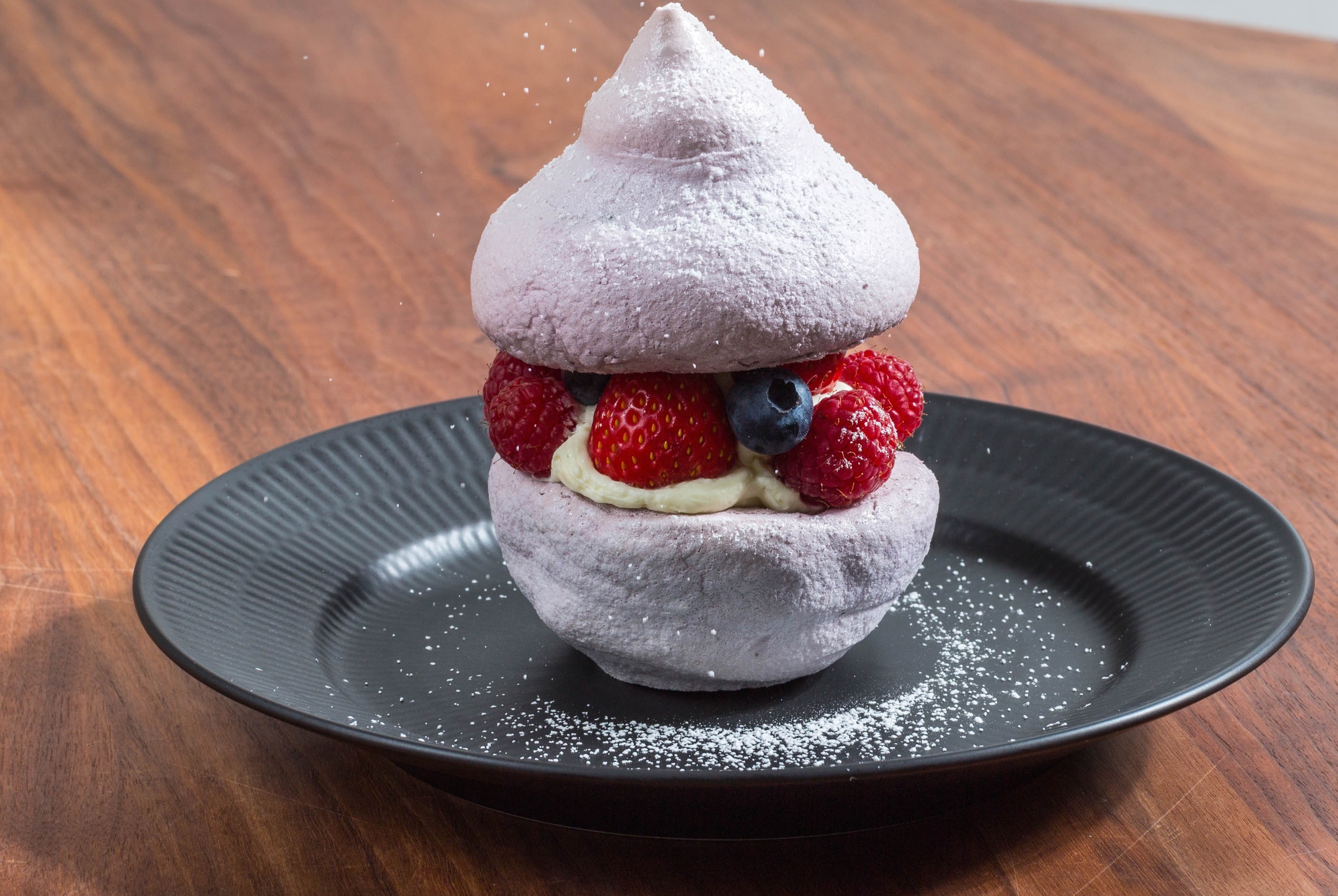
Valentines Pavlova

Valentines Pavlova

I made pavlovas before but never with this finish. It was meant as a serving sized dessert, but to be honest, it came out as a dessert for sharing with your loved one. 

I love the taste of the meringue with the lemon juice. The kind of pavlova I grew up with, "fuglereder" or birds nests in English, were plain white meringues, and they just tasted sweet, and served as a vessel for whipped cream and fresh berries or canned fruit if you were really unlucky.

I know 3 is a crowd on Valentines Day, but I like to make tree desserts just in case I'll fumble and break one of the meringues. I know this will happen if I don't have a spare. 

Makes 3

Ingredients:

Meringue:

  • 4 egg whites
  • 120 g granulated sugar
  • 55 g confectionary sugar 
  • 1 teaspoon lemon juice, fresh squeezed 
  • pink food coloring

Filling:

Directions:

Meringue:

Preheat oven to 185℉ (85℃). Line a baking sheet with parchment paper. Draw 6 3-inch (7.5 cm) circles about 2-inch (5 cm) apart on the parchment paper, and turn the parchment paper upside down, so you don't get any pencil on the pavlovas.

In the bowl for the stand mixer, beat egg whites until frothy. Add the sugar gradually, a couple tablespoons at a time, while still beating the egg whites. Whip the egg whites until stiff peaks. The egg whites/meringue will become thick and glossy. Gently fold in confectionary sugar and then fold in lemon juice and food coloring. Be careful not to over mix the meringue.

Spoon the meringue into a piping bag with a large round tip, and push the meringue down towards the tip. 

Hold the piping bag at a 90-degree angle about an inch above the parchment paper, pointing at the center of the circle. Pipe with an even pressure until the meringue fills the circle. Ease the pressure on the piping bag and lift the piping bag straight up, making the meringue look like at big teardrop. Repeat for the rest of the circles.

Bake the meringues in the center of the oven for about 25 minutes, you should be able to gently remove the teardrops from the parchment paper. If you can't do this after baking for 25 minutes, then bake them for another 10 minutes. (This is when I knew my oven was broken. I had to bake the pavlova for about an hour before I could handle them)

With  the flat bottom of the meringue facing up, spoon the inside out the inside, leaving a thin dome of meringue. Repeat with the rest of the meringues. Return the meringue domes to the baking sheet, and bake for another 30 minutes, flat side down. This will dry the meringues completely. 

Let the meringues cool to room temperature.

Half of the domes (3) needs to be sanded down, using a microplane grater. This will become the base of the pavlovas.

Assemble:

Place the base of the pavlova, hollow side up on a plate. Pipe a big dollop white chocolate/lime ganache in the center filling the base. Place berries and quartered strawberries so they are covering the sides and top of the ganache. Pipe a small dollop ganache on top, to make the top dome stick.

Dust the top with confectionary sugar, and serve immediately.

TIPS:

For at quick dessert: Instead of making the teardrop, you can spread the meringue inside a drawn large circle on the parchment paper. Spread the meringue working from the center towards the edge. You want to make it look like a bowl. Bake it at 300℉ for 90 minutes. Fill the cooled bowl with ganache topped with fresh fruit.

Enjoy!


The Danish version:

Valentines Pavlova/Fuglereder

Ingredienser:

Marengs:

  • 4 æggehvider
  • 120 g sukker
  • 55 g flormelis
  • 1 tsk friskpresset citronsaft
  • pink madfarve (jeg bruger wilton pastafarve)

Fyld:

Fremgangsmåde:

Opvarm ovnen til 85℃.

Tegn 6 cirkler med en diameter på 7,5 cm, ca 5 cm fra hinanden på et stykke bagepapir. Læg bageparpiret på en bageplade med tegningen ned mod pladen, så du ikke får blyant på dine kager. Læg på en bageplade. 

Pisk æggehviderne let til de begynder at blive skummende. Tilsæt sukkeret et par spsk ad gangen, mens du pisker. Pisk æggehviderne til du kan vende skålen på hovedet uden at det løber ud. Marengsen er så tyk og blank. Fold forsigtigt den sigttede flormelis i massen. Når flormelisen er blandet i, vend farve og citronsaften i. Pas på med at over-mikse marengsen. 

Kom marengsen i en sprøjtepose med en stor rund tylle i. Pres marengsen ned til spidsen, og pres eventuelle lufthuller ud. 

Hold sprøjteposen i en 90 graderes vinkel ca 2 cm over bageparpiret. Pres marengsen ud, så den fylder cirklen ud, slip presset på sprøjteposen og løft den lige op, så marengsen ligner en stor dråbe. Gentag for resten af cirklerne.

Bag marengsne i 25-35 minutter indtil de er tørret lidt, så det er muligt for dig at løsne dem fra papiret, uden at ødelægge dem. Du skal have ca 1 cm tørret marengsskal. (Det var her min ovn for alvor stod af, da jeg var nød til at bage dem i næsten en time, før de var til at håndtere.)

Hold marengsdråben med den flade side opad, og skrab det inderste ud. Jeg skar en cirkel med en skarp kniv, så jeg fik en jævn kant. "Indmaden" er stadig en blød marengs. Sæt dråben tilbage på bagepladen og gentag med resten. Bag marengsdråberne med åbningen nedad i yderligere 30 minutter, indtil de er helt tørre. 

Lad marengsdråberne køle helt af.

Haklvdelen af dråberne skal have toppen slebet af med et fint rivejern. Disse skal være bunden af fuglereden.

Samling:

Sæt bunden af fuglereden med hullet opad på tallerken. Sprøjt en stor klat hvid chokolade/lime ganache i, så den fylder skålen ud. Placer bær hele vejen rundt så det dækker ganachen. Kom lidt ekstra ganache på toppen, til at lime "låget" på.  Gentag med de resterende fuglereder. 

Lige før serveringen drysses med lidt flormelis.

TIPS:

For en hurtigere dessert, kan du forme marengsen som en stor skål  og bage den i ca. 90 minutter ved 150℃. Fyld den kølede skål med ganache og frisk frugt.

Velbekomme!

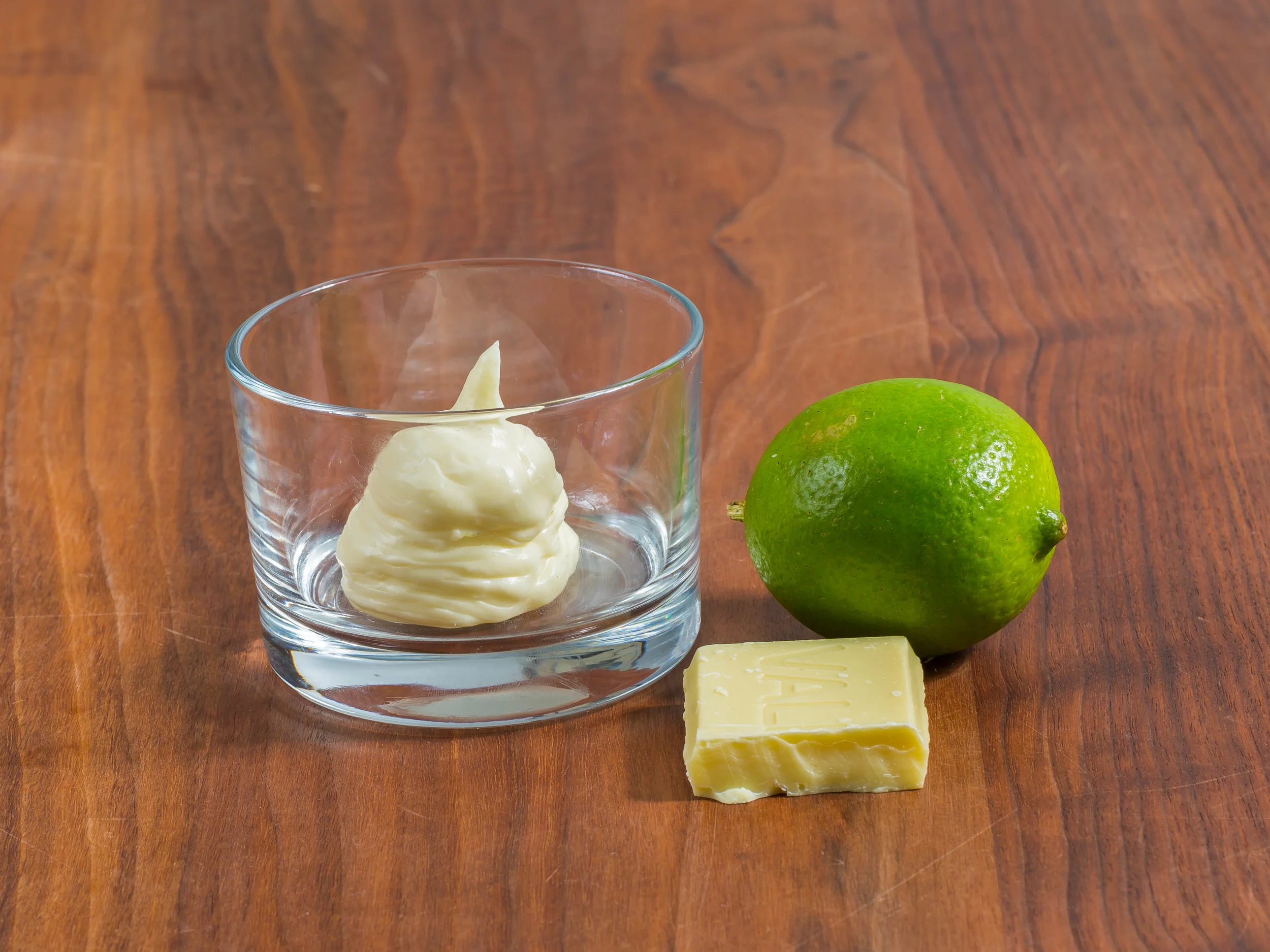
White Chocolate/Lime Ganache

Cake, DessertsTove Balle-PedersenComment
White Chocolate/Lime Ganache 

White Chocolate/Lime Ganache 

This sweet creamy ganache is perfect in a classic layer cake instead of a buttercream or in french macarons. * Next time I'll try with only 1 gelatin sheet, so I get a softer ganache. but otherwise it was perfect. This is the kind of ganache that can be eaten with a spoon, it's that good.

This recipe is adapted from Dominique Ansel's recipe.

Ingredients:

  • 2 gelatin sheets or 2 teaspoons gelatin powder *
  • water for blooming, 2 tablespoons if using gelatin powder
  • 120 g white chocolate (use a good one, like Valrhona)
  • 200 ml heavy whipping cream
  • 1 lime, the zest of
  • 25 g sugar
  • 50 ml freshly squeezed lime juice

Direction:

Soak the gelatin in water, or if using gelatin powder sprinkle over 2 tablespoons water. Let to bloom for 10-15 minutes. 

Chop the chocolate finely and place in a bowl, set aside.

Rub the sugar and zest together between your fingers until the sugar is moist, grainy and very aromatic.

Heat the cream with the aromatic sugar, in a saucepan, to a soft boil. Remove from heat. 

Melt the bloomed gelatin in the hot cream, while whisking. Pour about one-third of the hot cream over the chocolate, and left to sit for 30 seconds. Then whisk until incorporated and melted. Add the rest of the cream and whisk until smooth. 

Let the ganache cool to room temperature, then whisk in the lime juice.

Cover the ganache with plastic wrap pressed directly against the ganache. This will prevent the ganache forming pudding skin. Let the ganache set over night or for at least 3 hours in the refrigerator. 

Whip the ganache on high speed until medium-stiff peaks. Put ganache into a piping bag with a round tip. Push the ganache towards the tip.  Place  the piping bag in the refrigerator until ready to use. (Will only keep  in refrigerator for up to 2 days).  

Use ganache in Valentines Pavlovas or french macarons.

Enjoy!

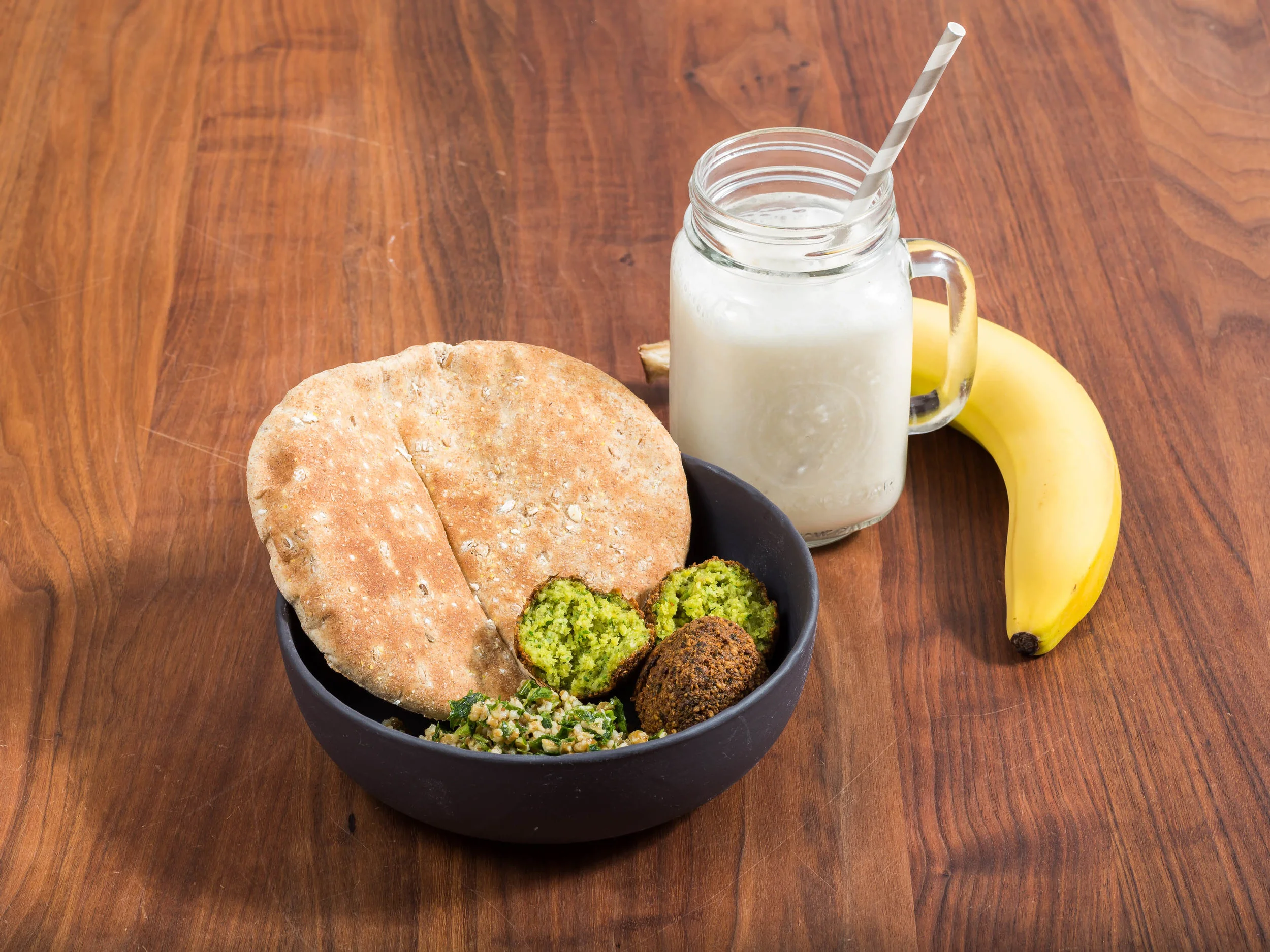
Banana Milkshake - no ice cream

Desserts, DrinksTove Balle-Pedersen2 Comments
Banana Milkshake - no ice cream

Banana Milkshake - no ice cream

This is a very tasty shake, with just 4 ingredients. Normally milkshakes are made with ice cream, and they tend to be very sweet. This one is creamy and not overly sweet, and it reminds me of the banana milkshake you get from Falafel's Drive in, in San Jose.

Makes 1 shake.

Ingredients:

  • 1 banana, frozen
  • 1 cup (240 ml) whole milk
  • 3 ice cubes 
  • sugar, to taste

Directions:

Add all ingredients to a blender, and blend until smooth.