Sweet • Sour • Savory

Food blog on scandinavian style food done right.

Breakfast

Romsnegle - Rum Rolls

Bread, Breakfast, Brunch, Cake, Holiday, techniqueTove Balle-Pedersen1 Comment
Romsnegle - Rum Rolls

Romsnegle - Rum Rolls

Romsnegle is a stable at a Danish baker's shop, much like the regular danish (spandauer). This is much like a cinnamon roll made with puff pastry dough and with another filling and icing. Same, - but totally different. This sweet filling pairs so well with the (imitation) rum icing. Ohh so yummy.

Making these rolls with puff pastry makes for a flakier and softer roll. Of cause this is a time consuming bake. But well worth the effort.

The Danish pastry is a laminated yeast dough much like the French croissant. There are many ways to make this lamination. The amount of layers are different from country to country and from baker to baker. You get the flaky layers by folding sheets of dough with butter. 

One of the more important things in puff pastry is the butter. You want to use a european style butter. The European butter contains less liquid and more milk fats than American butter. Most people opt for unsalted butter, but I always use salted butter in my baking.

There are different kinds of folding/turning when it comes to pastry and croissant dough:

Letter fold or Single turn: Dough folded in thirds, like you would do a letter going into an envelope. (I did this for this recipe.)

1. Turn: makes 3 layers of butter

2. Turn: makes 9 layers of butter

3. Turn: makes 27 layers of butter.

Book fold or double turn: Dough folded to the middle and folded again on the middle like a book. This makes 4 layers per fold or turn as they are called.

1. Turn: makes 4 layers of butter

2. Turn: makes 16 layers of butter

3. Turn: makes 64 layers of butter

Some people claim that any more layers than 3 turns using a letter fold, will make the dough like a brioche instead of providing the flaky layers. The 3 turns makes 27 layers. You can mix the folding methods to get the amount of layer you want.


Makes 20.

Ingredients:

Dough:

  • 375 g all-purpose flour

  • 200 ml milk

  • 25 g live yeast or 2 teaspoons dry yeast

  • 45 g sugar

  • 50 g butter, salted and soft

  • 1 egg

Butter block:

  • 350 g butter, cold (use a European style butter, it contains less water, than the American butter)

  • all-purpose flour for dusting

Remonce:

  • 100 g butter, salted and soft

  • 100 g sugar

  • 70 g marzipan

  • 1 teaspoon vanilla bean paste

  • 1 tablespoon all-purpose flour

Icing:

  • 1 egg white (pasteurized)

  • Confectionery (powdered) sugar

  • 1-2 teaspoon imitation rum

multicolored sprinkles

Directions:

Dough:

Heat the milk to lukewarm (99℉/37℃). Dissolve the yeast in the warm milk. Add the sugar. If using dry yeast, let the yeast wake up for about 5-10 minutes, until creating a foam on top. Incorporate the egg.

Mix in half of the flour, forming a sticky dough. Mix in the softened butter. Finally mix in the rest of the flour and knead the dough until you have at shiny, slightly sticky and elastic dough, for about 3-5 minutes.

Place the dough on a very lightly floured surface. Using a bench scraper and one hand, work the dough into a round. The tension will build as the dough achieves to the surface as you rotate it.

Place the dough back in the bowl and let it rise until doubled in size, for about 60 minutes.

Butter block: 

Place the cold butter on a well floured surface. With your palms press the butter a little flat. Using a rolling pin pound on the butter to flatten it. Fold the butter into its self, and keep pounding and folding until the butter has the same consistency as the dough. You want to end up with a 15x15 cm / 6x6 inch square of soft but still cold butter. If the butter is too warm or too hard, it will be hard to roll it out in the dough, and it might make holes in the dough, instead of the lamination.

Laminating

Laminating

Laminating:

Place dough  on a lightly floured surface, roll 4 wings out from the center, leaving a center (15x15 cm / 6x6 inch), the same size as the butter block.

Place the butter block over the center, fold the wings over the butter, making sure not getting too much flour in between the layers. Turn the dough over, so the seams are facing down.

Roll the dough to a rectangle, 3 times as long as the hight. Keep it lightly floured so the dough do not stick to the surface. Make sure to roll the dough with straight edges. This will ease the folding.

Making a fold.

Making a fold.

1. Turn: Fold the rectangle in thirds, like a letter. Now you have 3 layers of butter. Place the dough in the freezer for about 20 minutes to cool the butter again.

Repeat this 2 times, making 3 turns and ending up with 27 layers of butter. Let the dough rest on the kitchen counter for 10-20 minutes. (If your kitchen is warm, do the resting in the refrigerator.)

Now the dough is ready to use as a puff pastry for sweet or savory dishes.

If you want to make sweet pastries, you want to make the 3. Turn on a surface sprinkled with about 100 g granulated sugar, and sprinkle another 100 g granulated sugar on top. This will make the dough sweeter and more crispy.

Remonce: 

Mix the all the ingredients so you end up with a soft fluffy mixture. You want to have a soft mixture, so you won't rip the dough, while spreading the remonce. The added flour will prevent the filling to ooze out of the rolls while baking.

Making the rolls.

Making the rolls.

Making the rolls:

Turn the dough out onto a lightly floured surface, and roll it to a large rectangle (16x16 inches/40x40 cm).

Spread the filling in a thin layer onto the dough, leaving a thin edge closest to your self, without filling.

Line 2-3 bakings sheets with parchment paper.

Roll the dough into a large log. Cut the log into 20 slices. When you place the slices on the prepared baking sheets, tuck the lose ends under the roll, and give the roll a little press.  Leave a good spacing between them, so they can spread out without "growing" together. Cover the rolls with a tea towel to rise for about 20 minutes.

Preheat the oven to 355℉ (180℃).

Bake the rolls for 14-16 minutes until deep golden brown.

Let the rolls cool completely, before icing.

Enjoy!

Tips:

The unbaked pastry can be frozen just, after shaping, individually, and can be baked straight out of the freezer, just add about 5 more minutes to the baking time.
Pullman Sandwich Loaf

Bread, Breakfast, BrunchTove Balle-PedersenComment
Pullman Sandwich Loaf

Pullman Sandwich Loaf

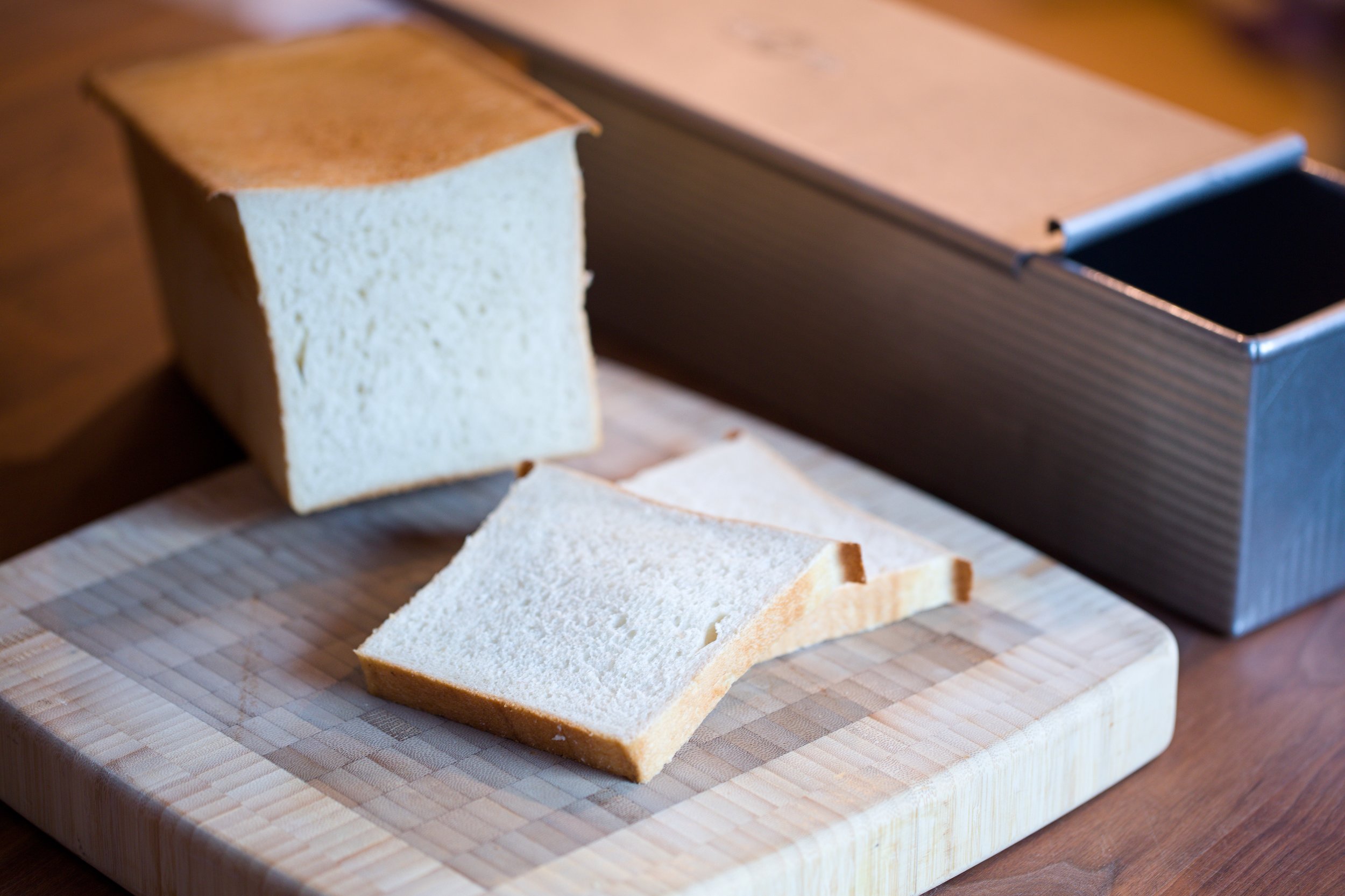
We have all bought sandwich bread in the stores. And you might ask why spend so much time baking this simple loaf. But this loaf is not your average sandwich bread. This is a feather light sweet soft loaf. And compared to most store bought loafs, this bread is filled with ingredients you actually can pronounce. We used the bread to make simple sandwiches in a panini press. And compared with store bought, the slices of the bread didn't flatten under pressure. Well worth the effort.

Ingredients:

  • 450 g all-purpose flour
  • 100 g Ølandshvedemel (you can use all-purpose flour or bread flour)
  • 6 g dry yeast
  • 32 g sugar
  • 11 g fine salt
  • 285 ml water
  • 1 egg
  • 25 g butter, salted and room temereature
  • 80 g cream cheese
  • egg wash 

Directions:

Spray a large bowl and the pullman loaf pan with non-stick spray, set aside.

Combine all the ingredients except the egg wash in the bowl for a stand mixer. Knead 4-5 minutes on low speed to form the dough. Keep kneading on medium low for another 15 minutes. 

Turn the dough out on a lightly floured surface. Stretch the dough by making 2-3 letter folds* turning the dough a quarter each timer, building up the surface tension on the dough. Place the dough seam side down in the sprayed bowl. Let the dough rise covered for 15-20 minutes.

Gently turn you dough out onto a lightly floured surface, seam side up. Weigh the dough, so you only shape 1 kg (a little over 2 pounds). Gently pat it to remove any large air bubbles, and form a rectangle. Make another letter fold, but only in one direction. You want to build up the surface tension, that will help you get a better ovenspring. Elongate the loaf, so it fits the length of the pan.  Make 1-3 folds, until you have a tight loaf with a good surface tension, ending up with a loaf shaped as a cylinder. Place the loaf in the pan, seam side down. Brush the top with egg wash. Slide the lid onto the pan, leaving ad slid open, so you can peek inside. Let the loaf proof for 2-2½ hours until the loaf barely reaches the top. 

Preheat the oven to 375℉ (190℃). 

Close the lid of the pan. Bake the loaf for 25 minutes. Carefully remove the lid of the pan, and bake the bread for another 10 minutes until the top is deep golden brown, and the loaf is baked through. 

Turn the bread out onto a wirerack to cool completely.

Slice the bread thinly.

Enjoy!

* Letter fold: Dough folded in thirds, like you would do a letter going into an envelope.


Fastelavnsboller with Berries

Breakfast, Brunch, Cake, HolidayTove Balle-PedersenComment
Fastelavnsboller with Berries

Fastelavnsboller with Berries

This is yet another take on the traditional fastelavnsbolle, a sweet cake like roll. Here with cream cheese and mixed berries. Fastelavnsbolle takes different shapes and forms. Some fastelavnsboller are plain like fastelavnsboller, some are filled with cream and custard like Marieboller - Fastelavnsboller or Fastelavnsboller - Choux Pastry

Fastelavn is a similar tradition as the American Halloween if you use a piñata in the form of  barrel.  Children get dressed up, and go a kinda trick and treating in the early afternoon. Well, they ask for money instead of candy, but it's only the young kid doing this. You can read more about the Danish fastelavns traditions here

Makes about 10.

Ingredients:

Dough:

  • 250 ml lukewarm milk
  • 2 teaspoons dry yeast
  • 85 g sugar
  • ½ teaspoon salt
  • 1½ cardamom 
  • 1 teaspoon vanilla bean paste
  • 450 g all-purpose flour 
  • 75 g butter, salted and room temperature
  • 50 g cream cheese

Cream cheese filling:

  • 75 g cream cheese
  • 50 g sugar
  • 2 teaspoons vanilla bean paste
  • 1 egg
  • 1 tablespoon cornstarch 

Berries:

  • 225 g mixed berries (only the smaller berries)
  • 50 g sugar
  • 1 tablespoon cornstarch 


  • egg wash

Directions:

Dissolve the yeast in the milk. Add the rest of the ingredients, and knead the dough for about 5 minutes. Let the dough rise covered for about an hour, until doubled in size.

Mix the filling and the berries in each their own bowl.

Preheat the oven to boil 435℉ (225℃).

Turn the dough on to a lightly floured surface. Divide the dough into 9-10 balls, I use a scale to get them to be the same size. (Just a tiny bit OCD😉). Let the balls rise for 15-20 minutes.

Make a silver dollar sized dent in each ball, making sure not to poke holes all the way through. brush the edges with egg wash. Spoon a small tablespoon fill-in in the holes, topping with the mixed berries.

Bake the fastelavnsboller for 12-15 minutes until golden brown. Let the fastelavnsboller cool on a wire rack before serving.

Enjoy!

Croissants

Bread, Breakfast, Brunch, Desserts, techniqueTove Balle-Pedersen1 Comment
Croissant.JPG

Croissants are made from a yeasted dough laminated with butter. It is so so good.

The trick is to keep the dough and the butter at the same temperature and texture, to prevent soft butter bleeding out of the dough. A too cold dough will crack a bit, so you are looking for a firm but yet soft dough.

There are different kinds of folding/turning when it comes to pastry and croissant dough. 

Letter fold or Single turn: Dough folded in thirds, like you would do a letter going into an envelope. (I did that for this recipe.)

1. Turn: makes 3 layers of butter

2. Turn: makes 9 layers of butter

3. Turn: makes 27 layers of butter.

Book fold or double turn: Dough folded to the middle and folded again on the middle like a book. This makes 4 layers per fold or turn as they are called.

1. Turn: makes 4 layers of butter

2. Turn: makes 16 layers of butter

3. Turn: makes 64 layers of butter

You can mix the folding methods to get the amount of layer you want. Theoretically you can make how many layers you want, but making too many layers makes you end up with a brioche dough, made the hardest way possible 😉.   

At the croissant class I attended I learned that Manresa Bread use 2 double turns (16 layers) for regular croissants, and 3 single turns (27 layers) for chocolate croissants. For traditional Danish pastry you normally use 3 single turns, giving the desired 27 layers of butter. If you are looking for a traditional puff pastry, you need 144 layers


Makes this 20-24 croissants. 

Ingredients:

Dough/Détrempe:

  • 750 g bread flour

  • 200 g water, lukewarm

  • 187.5 g milk

  • 90 g sugar

  • 22.5 g salt

  • 65 g live yeast (15 g dry yeast)

  • 7.5 g malt powder

  • 37.5 g butter, room temperature

Beurrage (butter):

  • 450 g cold butter

  • all-purpose flour for dusting

Directions:

Dough/Détrempe:

Mix the milk with the water, dissolve the yeast in this mixture. Add the sugar. If using dry yeast, let the yeast wake up for about 5-10 minutes, until creating a foam on top. 

Mix in half of the flour and malt powder, forming a sticky dough. Mix in the softened butter. Finally mix in the rest of the flour and knead the dough until you have a shiny, slightly sticky and elastic dough, for about 3-5 minutes. The dough will be a bit on the dry/tough side.
Shape dough into a ball and place it in a dough rising bucket, or another large covered container. Let the dough fermented overnight, this will give you a good flavor.

Beurrage (butter):

Place the cold butter on a well floured surface. With your palms press the butter a little flat. Using a rolling pin pound on the butter to flatten it. Fold the butter into it self, and keep pounding and folding until the butter has the same consistency as the dough. You want to end up with a 30x32 cm (11x12.5 inch) sheet of soft but still cold butter. If the butter is too warm or too hard, it will be hard to roll it out in the dough, and it might make holes in the dough, instead of the lamination.
If you don't want to add any flour to your butter, you can pound and roll out the butter between sheets of parchment paper. Chill the butter while you roll out the dough. 

Laminating:

Place dough on a lightly floured surface, roll it out to 62x32 cm (24.5x12.5 inch), so the dough is the width of the butter, but a little over double in length. Clearly I rolled my dough longer than necessary, but it worked fine anyway. Place the butter on the dough, and wrap it with the dough, pinching the edges, meeting in the middle of the dough, together. Chill the dough package covered in the refrigerator for about 15-20 minutes, before starting the folding/turning.

croissant.jpg

Roll the dough to a rectangle, 3-4 times as long as the height. Keep it lightly floured so the dough do not stick to the surface. Make sure to roll the dough with straightedges. This will ease the folding.

Fold the far edges into the middle and fold again on the middle like a book. Now you have 4 layers of butter. Place the covered dough in the freezer for about 20 minutes to cool the butter again, and to relax the gluten.

Repeat this one more time, making 2 double (book) turns and ending up with 16 layers of butter. If you want to use this dough for Danish pastry or chocolate croissants, I would make 3 single turns, so you end up with 27 layers.

Before shaping the croissants you want the dough to rest covered in the refrigerator for at least 45-60 minutes. And letting it sit covered for 5 minutes on the kitchen counter, letting the butter to soften up a bit.

Shaping the croissants:

fullsizeoutput_1eef.jpeg

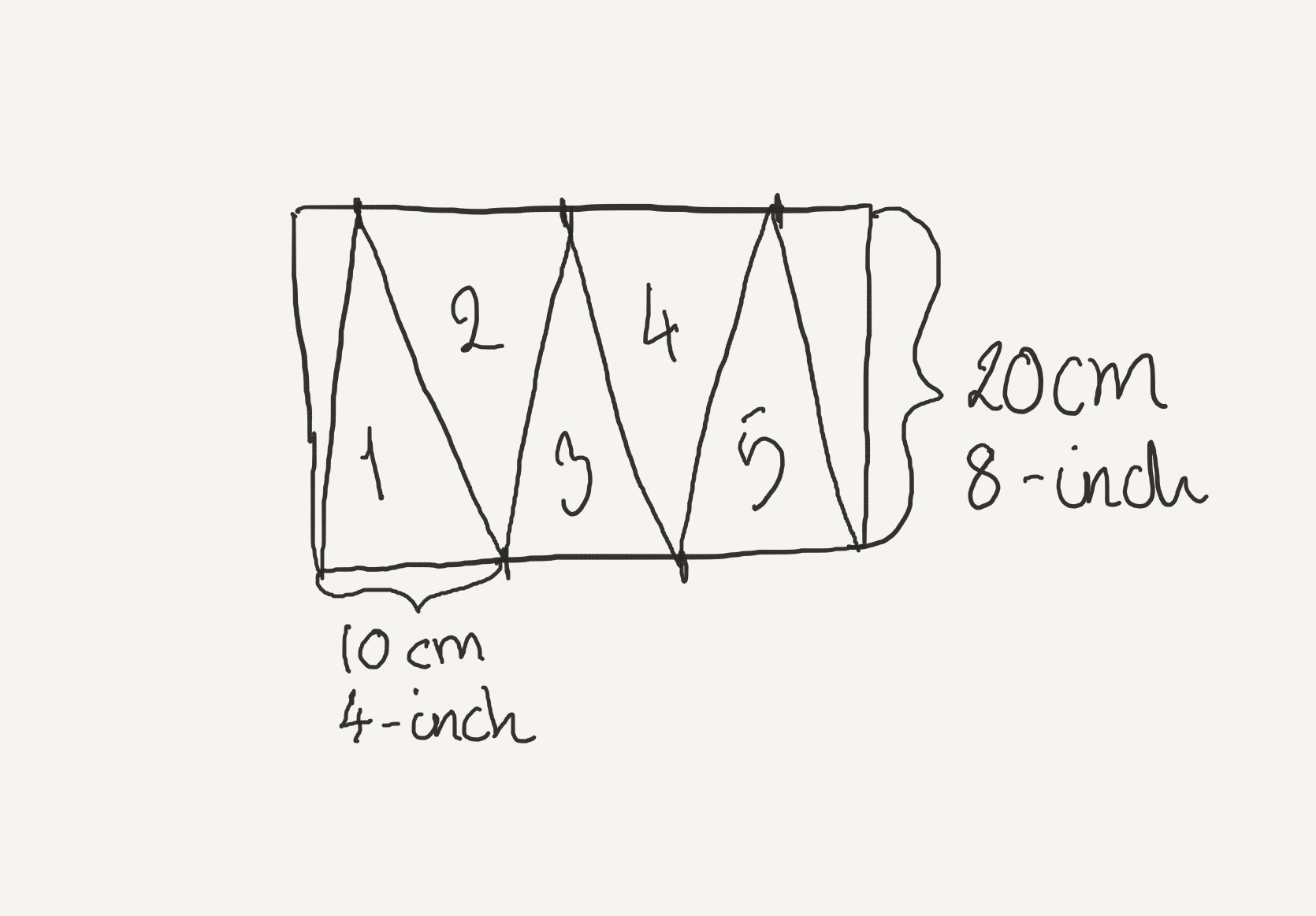
Roll half the dough out to a 20x40 cm (8x16 inch) rectangle. Using a knife or pizza slicer to cut the dough. Cut the croissant triangles as shown in the picture. (you get 7, not 5 croissants from the dough, I missed the last 2 in the picture, sorry). Let the dough rest covered 5 minutes to relax the gluten a bit. 
Stretch the triangle, so you elongate it, be careful not to rip the dough. Roll the dough towards the tip of the triangle, making sure that the tip is on the underside of the croissant.Place the croissant on a parchment paper lined baking sheet, spaced at least 5 cm (2 inch) apart.

Proof the croissant covered at maximum 85℉ (29.5℃) for 45-60 minutes until doubled in size. I have a proof setting on my oven, so I can use that, with a cup of boiling water sitting next to the baking sheet. But you can also proof the croissant on the kitchen counter, in a large air filled plastic bag.

Presheat oven to 350℉  (177℃) convection or 375℉ (190℃) foer non-convection.

Gently brush the croissants with egg wash, covering the exposed surfaces not allowing the egg wash to drip or pool.

Bake the croissants for 15-20 minutes, until golden brown. Let the croissants on the baking sheet on the kitchen counter. 

Serve the croissants within a day. 

Enjoy!

y7P8gX3USIuet5IT8olPPg.jpg


Tip:

The unbaked pastry can be frozen just, after shaping, individually, and can be baked straight out of the freezer, just add about 5 more minutes to the baking time.

 

Tip:

Leftover croissants can be used for almond croissants. Make some frangipan (125 g almond flour, 125 g butter, 125 g powdered sugar, 12 g all-purpose flour and 1 large egg, all mixed together) and smear it inside the croissant, and on top, before baking it for xx minutes.


Lobster Benedict- Sous Vide

Breakfast, Brunch, Fish & seafoodTove Balle-PedersenComment
Lobster Benedict- Sous Vide

Lobster Benedict- Sous Vide

Lobsters are a creature with a delicate taste and texture. So by poaching it in butter, you get the purest and cleanest lobster taste ever. Making it Sous Vide you are getting the perfect texture to your liking. The temperature is controlling the texture. Well time is too, but by poaching the lobster for 45-60 minutes, temperature is the controlling factor. 

Different cooks choose different poaching temperature. Thomas Keller calls for 139℉ (59℃) and Modernist Cuisine calls for 115℉ (46℃).

Serious Eats tested different temperature, and this were their finings:

Temperature - texture

120℉ (49℃) - Soft and translucent

130℉ (54℃) - Tender and succulent

140℉ (69℃) - Firm

I decided to go with 135℉ (57℃) and the result was fantastic, I got a tender and somewhat firm juicy lobster. This one is a winner.

Serves 2.

Ingredients:

Butter poached lobster tail:

  • 4 lobster tails, shells removed and deveined

  • 113 g salted butter (1 stick butter)

  • sprinkle of salt

Benedict:

Hollandaise in blender:

  • 250 g salted butter, clarified

  • 4 egg yolks

  • ¼ teaspoon salt

  • ¼ teaspoon ground white pepper

  • ½ lemon, the juice from

  • 1 pinch cayenne

Directions:

Butter poached lobster tail:

Set you sous vide to 135℉ (57℃).
Place the lobster tails and butter in a vacuum sealer bag, sealing with the moist setting. Place the bag in the water bath, making sure that the lobster is fully submerged. Set timer for 50 minutes.
Remove lobster tails from the bag, discarding the liquid, when it is time to serve your benedict.

Hollandaise:

Melt the butter in a sauce pan over very low heat.  Let simmer gently until the foam rises to the top of the melted butter. Once the butter stops spluttering, and no more foam seems to be rising to the surface, remove from heat and skim off the foam with a spoon. The foam is the milk solids from the butter. Ladle the butterfat into another saucepan leaving the water and residue behind. You can also pour the butterfat through some cheesecloth. Keep the butterfat warm.
The clarified butter should be about 172℉ (77℃).

Add the rest of the ingredients, except cayenne, in a blender. Blend until foaming. With the blender running add ⅓ of the butter in a slow steady stream, yes it will splatter. Once it emulsifies, turn the blender speed up to high and add the remaining butter. Season with salt and pepper and blend for another second. Sprinkle the cayenne on top when serving.

* Instead of regular hollandaise sauce, you can use the more healthier avocado hollandaise 

Benedict:

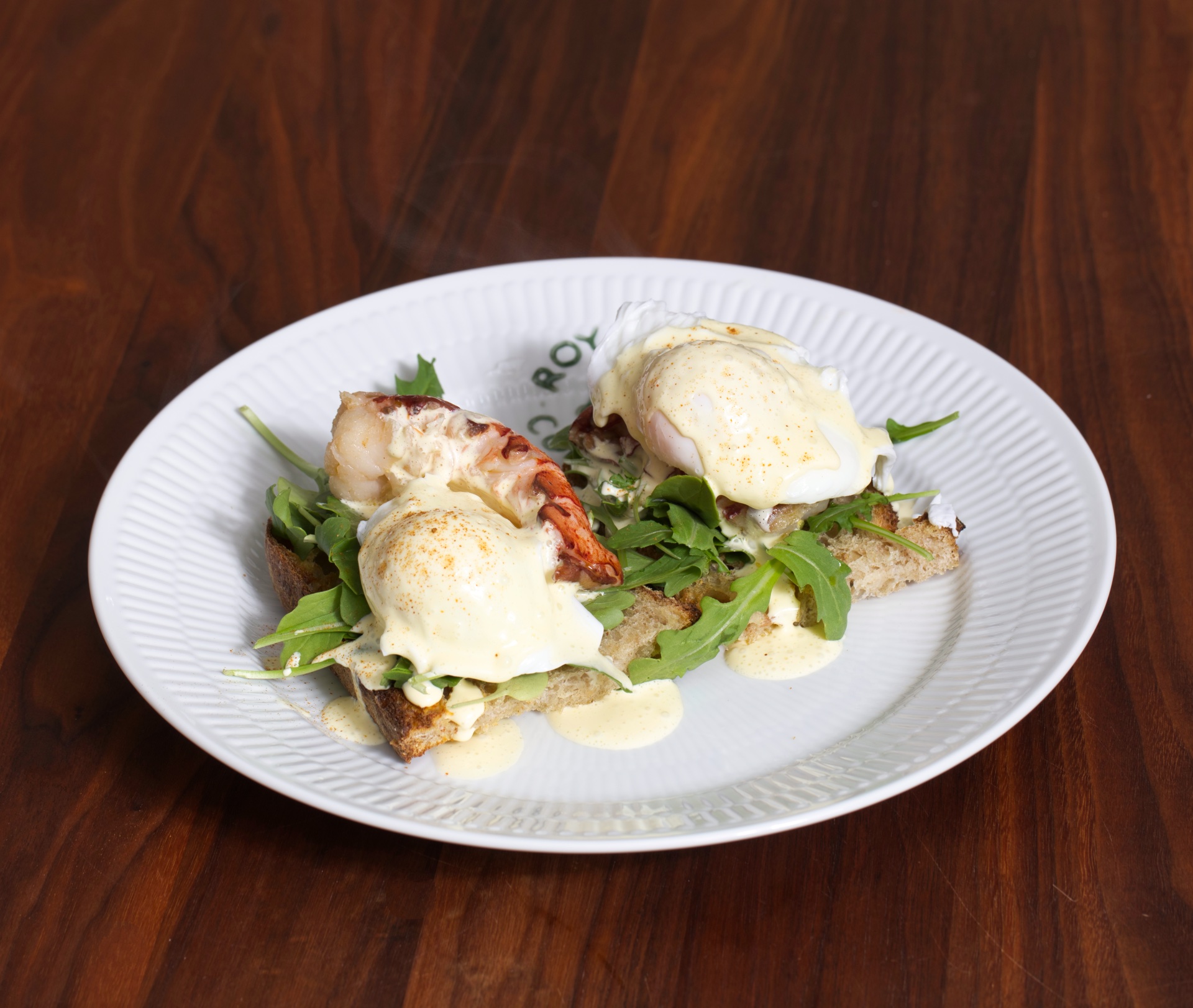
Toast the bread, place a handfull arugula on it, placing a lobster tail and a poached egg on top. Ladle a spoonful warm hollandaise over, sprinkling with some cayenne.

Serve immediately. 

Enjoy!