Sweet • Sour • Savory

Food blog on scandinavian style food done right.

Hot Chocolates

Drinks, LiquoriceTove Balle-PedersenComment
Hot chocolates

Hot chocolates

On a lazy sunday afternoon I stumbled over a tweet from madsymfonien with a hot chocolate with marshmallows and liquorice. It looked so good, and I had just bought marshmallows the other day, so I had to try to make it.

My hot chocolate was made from ⅓ milk chocolate, ⅔ dark chocolate and whole milk. I added three different sprinkles on top.

The first had freeze-dried  blackcurrant, which added a nice tangy flavory to the sweet chocolate. The second crushed Raw Liquorice Drops, giving the chocolate a nice liquorice aftertaste, without being overpowering.The third had a very light dust of Ghost Pepper, which added a hotness to the chocolate without being to hot. Actually this one was the best chili hot chocolate I have ever had. 

Granola a la Kona

Breakfast, Brunch, SnacksTove Balle-Pedersen2 Comments
Granola a la Kona

Granola a la Kona

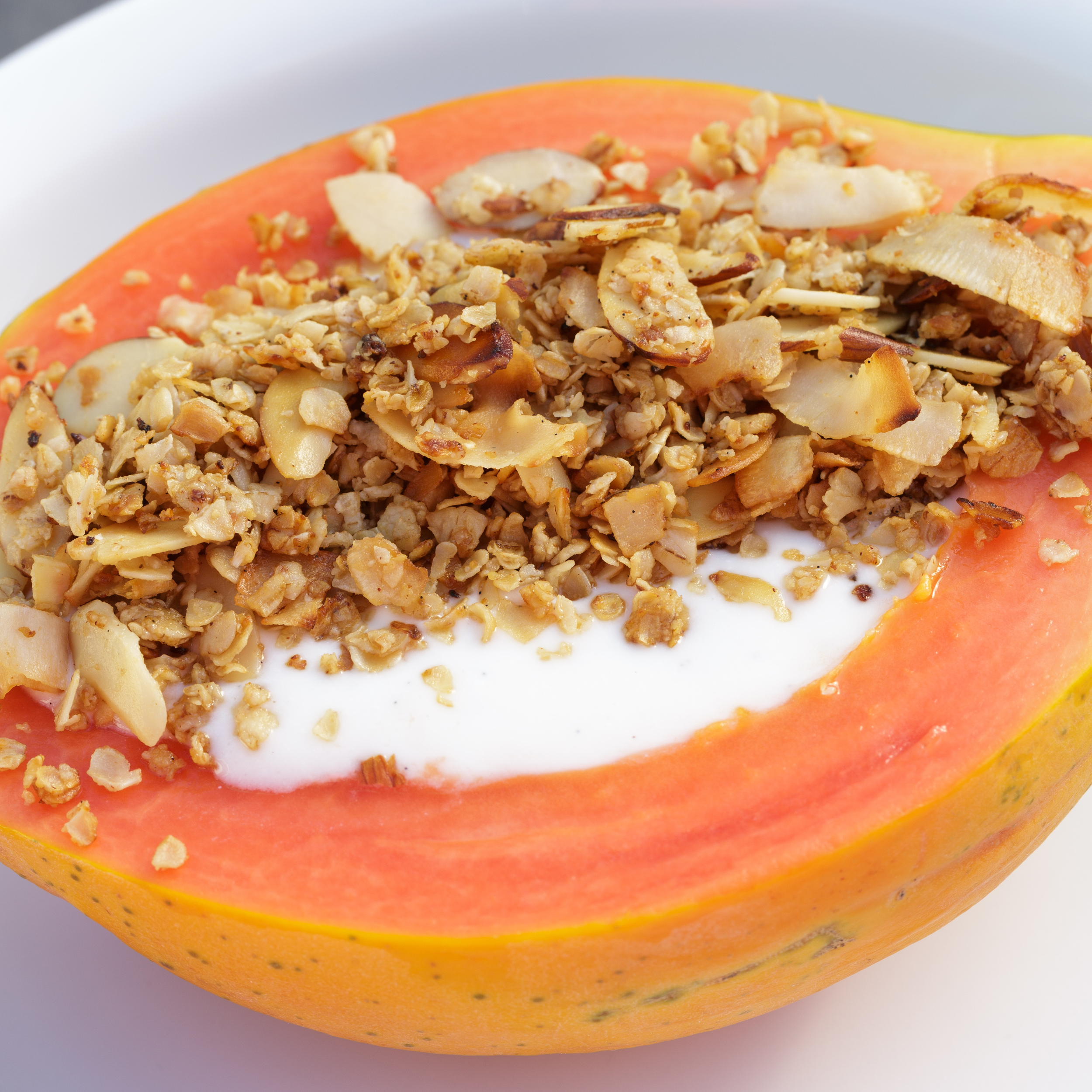
My vacation to Hawaii a couple of years ago, inspired me to make this granola. My husband had a granola with coconut, almonds and oats, served over yogurt in a papaya fruit, and it became one of his favourite breakfasts. So when we got home from vacation, I had to recreate the granola. I make the granola in a wok on the stove, but you can easily make it in the oven. 

Ingredients:

  • 1 tablespoon coconut oil
  • 1½ tablespoon honey
  • ½ cup coconut flakes
  • 1½ cup quick oats
  • ½ cup slivered almonds
  • 1 sprinkle cinnamon
  • ½ teaspoon vanilla paste

Directions:

Heat the oil in the wok, and add the honey. Let the honey foam for a moment, and then add the rest of the ingredients. Keep stirring and cook until the granola turns golden brown. Pour the granola into a large pan or baking sheet and spread the granola out in an even layer, and let it cool. The granola crisp up while cooling. The more you stir during the cooling period, the more separated the granola gets.

If you want to cook the granola in the oven:

Preheat the oven to 350℉ (180℃).

Combine oats, almonds, coconut and cinnamon in a  large bowl, and set aside. 

Melt the oil and honey in a small saucepan, remove from heat, and  add the vanilla paste. Pour over the oat mixture and mix until the oats are thoroughly coated. Spread the mixture in a thin, even layer on a baking sheet lined with parchment paper. Bake the granola for 15 minutes, then stir and continue baking until the granola is very light golden brown, about 5 to 10 minutes more. 

Remove from oven and place on a wire rack to cool. The granola crisp up while cooling. The more you stir during the cooling period, the more separated the granola gets.

Store the granola in a large, airtight container. It will keep for up to one month.

Serve the granola on yogurt with fresh fruit, or in a papaya. 

Enjoy.


Moussaka

Dinner, MeatsTove Balle-Pedersen5 Comments
Moussaka

Moussaka

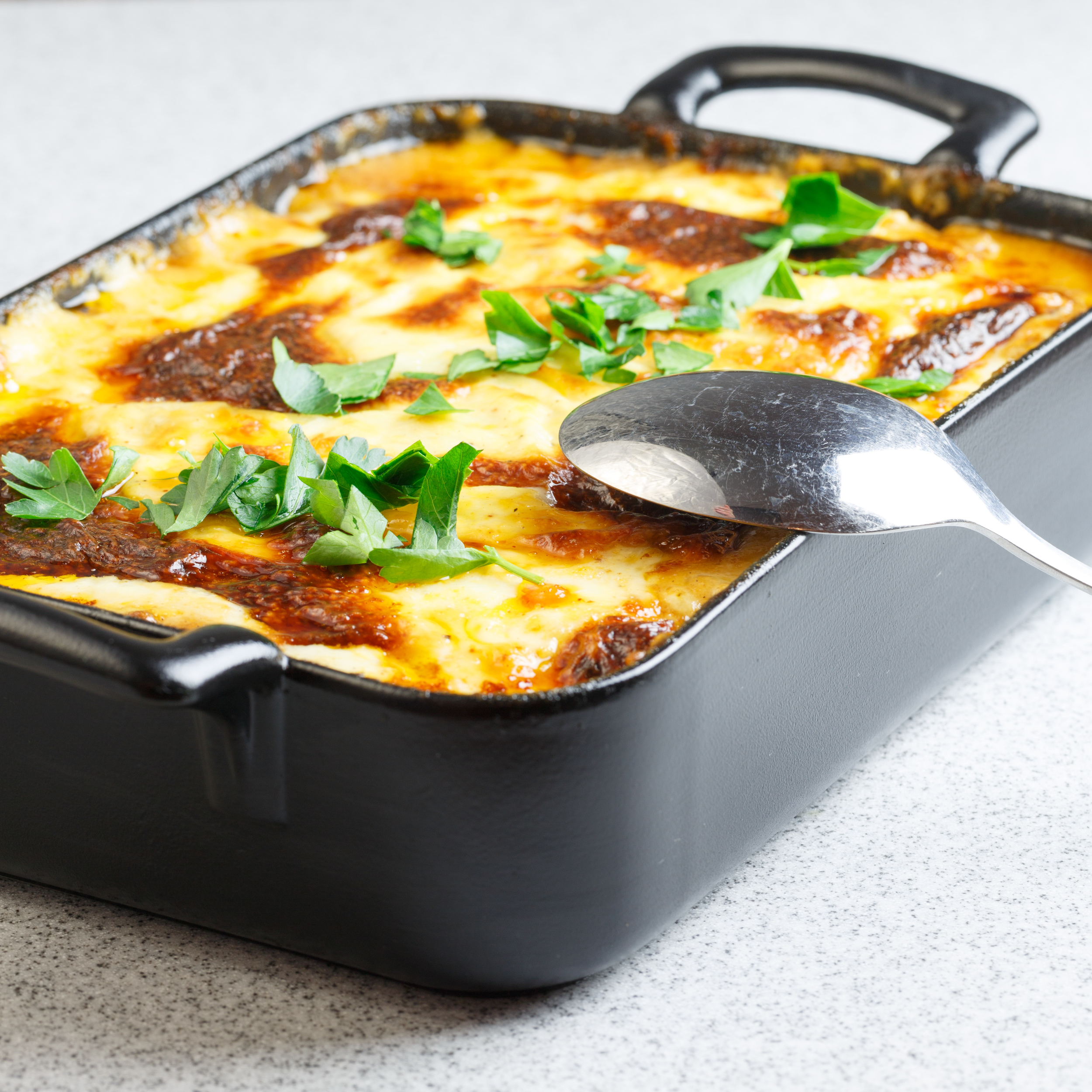
Traditionally, Greek moussaka is a baked dish of layered eggplant, lamb or beef, tomatoes, and potatoes. A traditional moussaka is made with allspice, but not all restaurant use allspice. I will always order this dish, when we go to a new Greek restaurant, because this dish tells you if it is real greek food or not. No allspice, and you properly won't have traditional greek food at this place.

The first time I had a traditional Greek moussaka, was at a small Greek restaurant in Kongens Lyngby in Denmark. It's not the most likely place to find a good Greek restaurant. It's in the middle of nowhere just across from a grocery store and in a roundabout in a residential area. But nevertheless this is a good restaurant, with peasant-style Greek food for a reasonable price. The moussaka from this place is to die for. I tried to recreate it, and after a lot of trial and error, I think I nailed it.

Ingredients:

  • 2 medium eggplants

  • salt

  • 1 pound (450 g) potatoes, peeled and finely sliced

  • extra virgin olive oil

  • 1 onion, diced

  • 2 garlic cloves, minced

  • 1½ pound lean ground beef

  • 2 cans chopped tomatoes

  • 2 teaspoons allspice

  • salt & pepper to taste

Mornay sauce*:

  • 25 g butter

  • 2 tablespoons all-purpose flour

  • 1½ (3½ dl) cups milk

  • salt & pepper to taste

  • ⅛ teaspoon nutmeg

  • mozzarella cheese

Directions:

Cut the top and bottom of the eggplants and cut them into slices about ⅕ inch thick. Put the eggplant slices in a colander, sprinkle salt between the layers, and let them drain for about 30 minutes. When the eggplant slices are done, pad them dry with a paper towel.

Heat ⅓ of the olive oil in a sauté pan over low heat, and fry the eggplants gently until tender. Remove from the pan and drain them of excess water and oil on a paper towel.

Fry the potato slices in a little oil in the sauté pan until they are slightly golden. Pad the excess oil of the potatoes with some kitchen towel.

Add a little more oil to the sauté pan and sauté the onions until transparent and soft. Add the ground beff and brown it, crumbling the meat with a wooden spoon. Add the garlic, allspice, a little salt and pepper. Cook, stirring frequently, for 5 minutes. Add caned tomatoes and let it simmer for 15-20 minutes or while you make the mornay sauce. Season with salt and pepper to taste.

Mornay sauce:

Melt the butter over medium heat in a sauce pan. Add the flour and a sprinkle of salt, stirring constantly, until all the flour is incorporated with the butter. You don't want it to get a golden. Whisk in the milk and cook, whisking constantly, until thickened and shiny, 3 to 4 minutes. Add more milk if the sauce is to thick. Whisk in the cheese and nutmeg. Remove from the heat and let cool slightly. Season with salt and pepper to taste.

Moussaka:
Preheat the oven to 400℉ (200℃).

In a deep ovenproof dish layer the eggplant, potatoes and meat like you would a lasagne. Pour the mornay sauce on top.

Bake moussaka for about 45 minutes until the surface is golden and bubbly. Let the moussaka rest for a few minutes before serving, letting the moussaka time to set.

Enjoy.

*Mornay sauce is a béchamel sauce with cheese.

Classic Fragilité Cake

Cake, DessertsTove Balle-Pedersen5 Comments
Classic Fragilité Cake

Classic Fragilité Cake

UPDATE !

The last few times I made this fragilité, I couldn’t get the buttercream fluffy. The taste was perfect, but missing the creamy fluffy cream.
Today I didn’t use a double boiler. I just whisked the butter pale and fluffy, then added the egg yolks, and kept whisking. Then I added coffee, cocoa and powdered sugar, kept whisking until the buttercream was perfect fluffy and yummy.

The classic fragilité cake with coffee buttercream originates from the same Danish pastry chef, Johannes Steen, who also made The Sarah Bernhardt cookie. And must originate from the beginning of the 1900s, when Denmark was very influenced by everything French. 

Fragilité means fragile, and it describes the cake well. It's made with delicate layers of crispy meringue with hazelnuts, layered with a mocha/coffee buttercream. The cake feels very light and fluffy, but don't let it fool you, it's filled with great tasting calories😋

Ingredients:

Meringue:

  • 100 g hazelnuts

  • 200 g confectionary sugar

  • 4 egg whites

Mocha buttercream:

  • 3 pasteurised  egg yolks

  • 100 g confectionary sugar

  • 150 g butter, salted and room temperature

  • 3 teaspoons unsweetened cocoa powder

  • 1,5 teaspoons instant coffee 

Directions:

Preheat the oven for 400℉ (200℃).

Chop the hazelnuts. I used the mini chopper that came with my immersion blender, and ended up with a coarse hazelnut flour. Mix the hazelnuts with half of the confectionary sugar.

Whip the egg whites, in a stand mixer, until you have soft peaks. Add the sugar and keep whipping until you have a shiny meringue with stiff peaks. You should be able to turn the bowl upside down.

Fold the hazelnut mixture in.

Line a baking pan with parchment paper, spray it and sprinkle with sugar. I used a 9" x 13" (20x30 cm) pan.  

Spread the meringue evenly in the pan, and level of the top.

Bake the meringue for 2 minutes at 400℉ (200℃), then lower the temperature to 305℉ (150℃) and keep on baking foe another 40 minutes.

Buttercream:

UPDATE !

I whisked the butter pale and fluffy on my stand mixer. Then added the egg yolks, and kept whisking. Then I added coffee, cocoa and powdered sugar, kept whisking until the buttercream was perfect fluffy and yummy.


Mix all the ingredients in a bowl, and whip the buttercream until thick and fluffy over a double boiler. I used a saucepan with very hot water, and placed my bowl on top of that. I didn't have it on the stove. It takes some time to get the buttercream nice and fluffy.


Cut the meringue in two, and place the one part on a cake stand, spread all the buttercream  on it in an even layer. Put the other half of the meringue on top. 

Decorate the cake with some melted chocolate or a sprinkle of confectionary sugar.

Sarah Bernhardt Cookies with Liquorice

Cake, Liquorice, Sweets and CandyTove Balle-PedersenComment
Sarah Bernhardt Cookies with Liquorice

Sarah Bernhardt Cookies with Liquorice

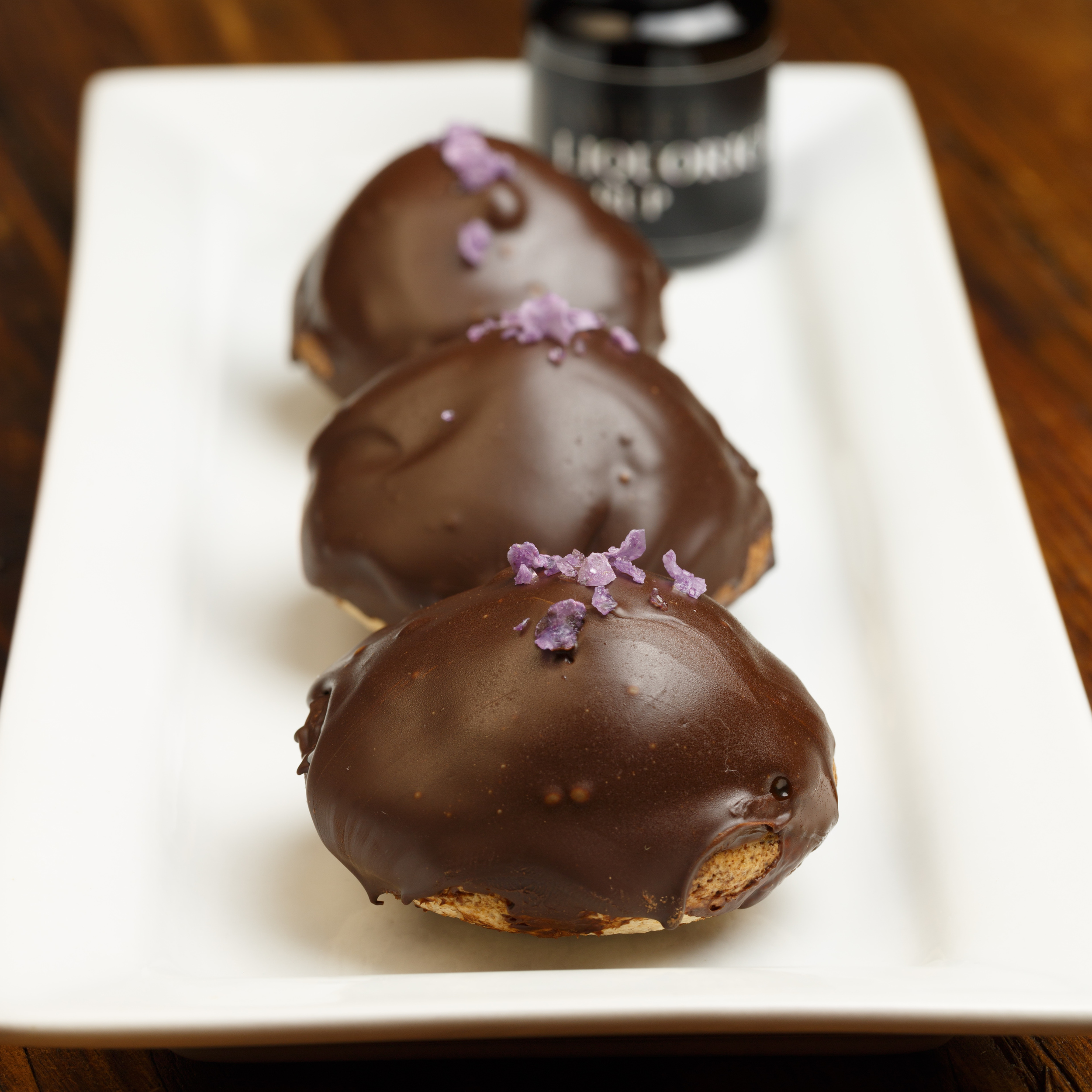
Sarah Bernhardt cakes originates to 1911, where a Copenhagen pastry chef (Johannes Steen) created this cake as a tribute to the world-famous french actress, Sarah Bernhardt, when she came to Copenhagen to mark the publication of her memoirs in Danish. 

The cake is a Danish makron cookie topped with a ganache covered with dark chocolate and decorated with candied violets.

I use the traditional recipe from "Kager & konfekt fra Kransekagehuset" with a few modifications.

Makes about 12 cakes.

Ingredients:

Cakes:

  • 12 Danish makroner
  • 150 g dark chokolate min. 60% cocoa, (a good one, I use Valrhona)
  • 100 g milk chocolate (a good one, I use Valrhona)
  • 1⅔ cup (4 dl) heavy whipping cream (use an organic with only milk as ingredient)
  • 4 teaspoons sweet liquorice syrup
  • 2 teaspoons salty liquorice syrup

Coating:

  • 200 g min. 60% cocoa, (a good one, I use Valrhona)
  • candied violets

Directions:

Ganache:

Chop the chocolate fine. Bring the cream to a boil in a saucepan, remove the pan from the heat and let the cream cool down to 60℃. Add the chocolate while stirring, and continue to stir until the chocolate is completely melted. Stir in the liquorice sirups. You should now have a dark shiny chocolate sauce/ganache. Cool the ganache in the refrigerator overnight. 

The next day whip the ganache with a stand mixer, be careful not to over mix the ganache, this will cause the ganache to curl and become grainy.

Put the ganache into a pastry bag (decoration bag) with a plain round tip. Pipe the ganache on the back side on the makron cookie as a peak. Transfer to freezer until very firm, about 1 hour. (This is where I made a mistake. My cookies were in the freezer overnight, and this made the filling to cold, and caused the condensation on the covered cookies).

Tempering dark chocolate:

Chop the chocolate finely, set just under ⅓ of the chocolate aside, and add the rest into a stainless steel bowl. Set the bowl on to a saucepan with very hot water. Let the chocolate melt while stirring. When the chocolate reaches 122℉ (50℃), take the bowl off the hot water. While stirring let the chocolate cool until it reaches 95℉ (35℃), add the rest of the chopped chocolate and stir vigorously until its all melted. When the chocolate reaches 82-84℉ (28-29℃) put the bowl over the hot water again, and heat the chocolate to 88℉ (31℃), and now its ready to use for coating.

Remove cookies from freezer. Working quickly so that the filling doesn't melt, use a fork to hold cookie above bowl of chocolate, and spoon melted chocolate over cookie. Place filling-side up on cooling rack placed over a baking sheet, sprinkle the candied violets on the tip of the cookie. Refrigerate until ready to serve.