Sweet • Sour • Savory

Food blog on scandinavian style food done right.

Meats

Spatchcocked (Butterflied) Roast Chicken

Dinner, Meats, Poultry, Simmer FoodTove Balle-PedersenComment

Spatchcocked (Butterflied) Roast Chicken.

This is my take on my parents' favourite chicken dish Poularde au Bayard - Chicken in White Wine - reimagined as a simple one-pan roast. Same flavours, same comfort, but with the crackling golden skin you only get from roasting.

Spatchcocking (or butterflying) means removing the backbone and flattening the bird before it goes in the oven. It sounds more dramatic than it is — two minutes with a pair of kitchen scissors and the hard part is done. The flat bird roasts faster and more evenly, and the skin, stretched taut across the whole surface, goes wonderfully crisp.

I love a one-pan dish like this and roast, rather than stews, because it brings a deeper, more complex flavour and caramelized skin. The roasted vegetables, and all those pan juices make a very tasty sauce. Simple enough for a busy weeknight, but impressive enough for company.

This dish is going to become a family favourite.

Yield: 4-6

Ingredients:

  • 1 large chicken, 2200 g and slow grown

  • 3 carrots, peeled, chopped

  • 500 g potatoes, peeled, halved

  • 4 tomatoes

  • 5 onions, peeled

  • 25 whole cloves to stud the onions

  • 4 garlic cloves, peeled

  • 250 g brussels sprouts, trimmed and halved

  • salt

  • pepper

  • 100 ml white wine

  • 100 ml heavy cream

Flavored Butter:

  • 4 tablespoons butter, salted and room temperature

  • ½ teaspoon dried tarragon

  • ½ teaspoon dried basil

  • ½ teaspoon paprika

  • ½ teaspoon dried rosemary

  • ½ teaspoon dried thyme

  • 1 bay leaf, crushed

  • 1 garlic clove

Directions:

Allow the raw chicken to sit at room temperature for 30 minutes before start cooking, it will produce juicier, and more evenly cooked meat.

Preheat the oven to 425℉ (220℃).

Make the flavoured butter: Mix all the ingredients until well combined, and set aside.

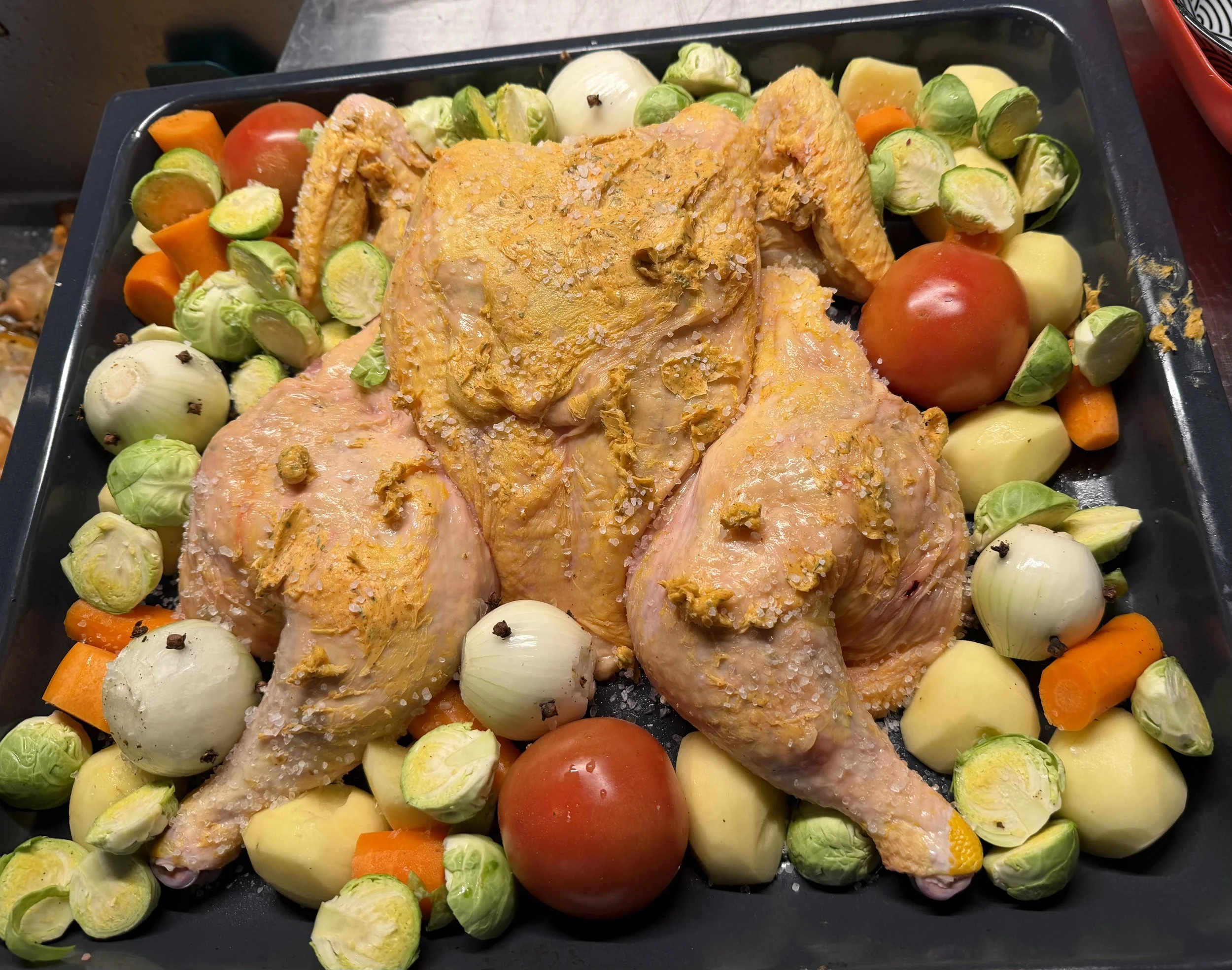
Spatchcock the chicken: Place the chicken breast-side down. Using sturdy kitchen scissors, cut along both sides of the backbone and remove it. Flip the bird breast-side up and press firmly down on the centre of the breastbone until it cracks flat. Place the chicken on a large rimmed baking sheet.

Butter the chicken: Pat the chicken dry with paper towels. Gently loosen the skin over the breasts and over the thighs, and push half the flavored butter underneath. Rub the remaining butter all over the outside of the bird. Season generously with salt and black pepper.

Stud each peeled onion with 4–5 whole cloves, pressing them firmly into the flesh. The cloves perfume the onions, making them extremely tasty.

Arrange all the vegetables round the chicken, and season with salt and pepper. Pour the cream and wine in the baking sheet when you put the sheet pan into the oven. The drippings, wine and cream will make a great sauce.

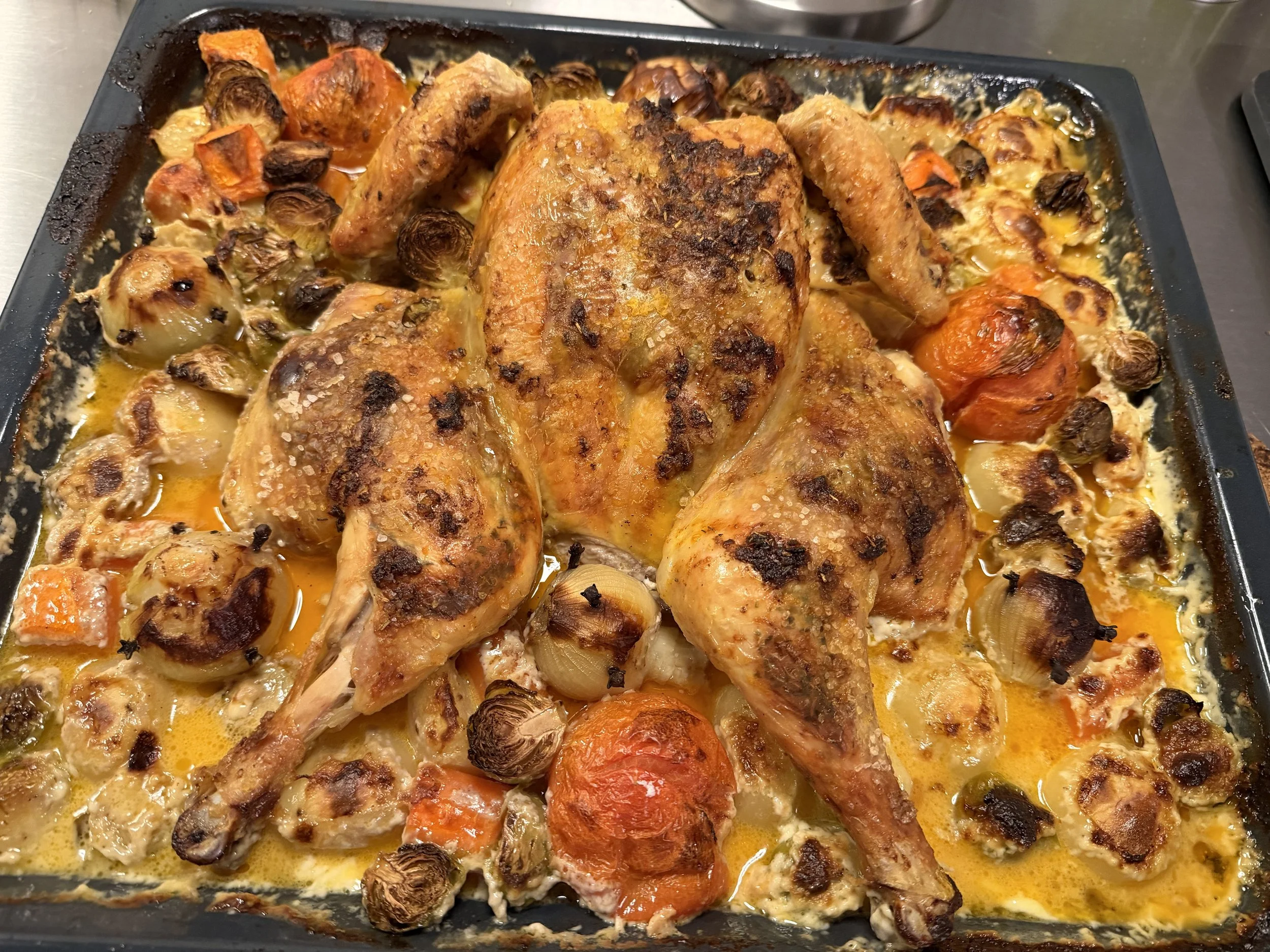
Roast the chicken for about 45 minutes, until the skin is deep golden and a thermometer inserted into the thickest part of the thigh reads 165°F (74°C). If the skin colors too quickly, tent loosely with tinfoil.

Transfer the chicken to a board and let it rest for about 10 minutes. This lets the juices redistribute for much juicier meat.

Make the sauce: Transfer the vegetables to a serving dish. Pour the pan drippings and all the caramelized bits into a small saucepan and bring to a gentle simmer. Season with salt and pepper. Thicken the sauce with some cornstarch.

Serve immediately, with the sauce spooned over. Make sure everyone gets some of the clove-studded onions — just remind your guests to remove the cloves before eating. They are, quietly, one of the best things on the plate.

Enjoy!

The roasted chicken.

Wienerschnitzel - Danish style Schnitzel

Dinner, Meats, PorkTove Balle-Pedersen3 Comments

Wienerschnitzel - Danish style Schnitzel.

Schnitzel is a classic Austrian or German dish. The German version is made with pork, and the Austrian is made with veal. But the Danish version can be made with both, but mostly I make it with veal.

The Danish wienerschnitzel is served with something called a boy, or dreng in Danish. The boy is the topping, the lemon, capers, horseradish and brined anchovies. I have no idea why it is called a boy, but I love the salty and tangy addition to a rather fatty schnitzel. Normally I serve a wienerschnitzel with boiled potatoes, some steamed peas and a mushroom sauce, or sautéed mushrooms.

If you for some reason don’t like the topping, I would serve the schnitzel with a warm tangy potato salad with lots of fresh herbs.

Serves 2.

Ingredients:

  • 2 veal scaloppines

  • 1 cup all-purpose flour

  • salt and pepper

  • 2 eggs, lightly beaten

  • 2 cups unseasoned bakery bread crumbs or panko

  • Olive oil or clarified butter for frying, do not skimp

Topping:

  • 1 lemon, cut in slices

  • 2-3 tablespoons capers

  • horseradish, grated, to taste

  • 2-4 brined anchovies

Directions:

Prepare 3 shallow bowls. Place the flour, eggs, and bread crumbs in 3 separate large, shallow bowls. Season the veal scaloppine with salt and pepper. Start dipping each scaloppine/schnitzel in flour, shaking off the excess. Then dip each completely in the eggs. Drain the scaloppine from the eggs and dredge them in the third bowl with bread crumbs, pressing the veal lightly into the crumbs to adhere. Place the breaded scaloppine/schnitzel on a plate or some parchment paper.

Heat the oil/clarified butter in a large skillet over medium-high. Cook the scaloppine/schnitzels for 4 minutes on each side, only turning them once. Add more oil or butter when turning, so the pan won’t run dry. You want the schnitzels to be golden brown and crisp. Transfer the schnitzel to some paper towels to drain excess fat. Place a schnitzel on each plate and top them with lemon, capers, horseradish and anchovies.

Serve the wienerschnitzel with boiled potatoes, peas and mushrooms and with a cream of mushroom sauce.

Enjoy!

Boneless Birds / Benløse Fugle

Beef, Dinner, Meats, Simmer FoodTove Balle-Pedersen1 Comment
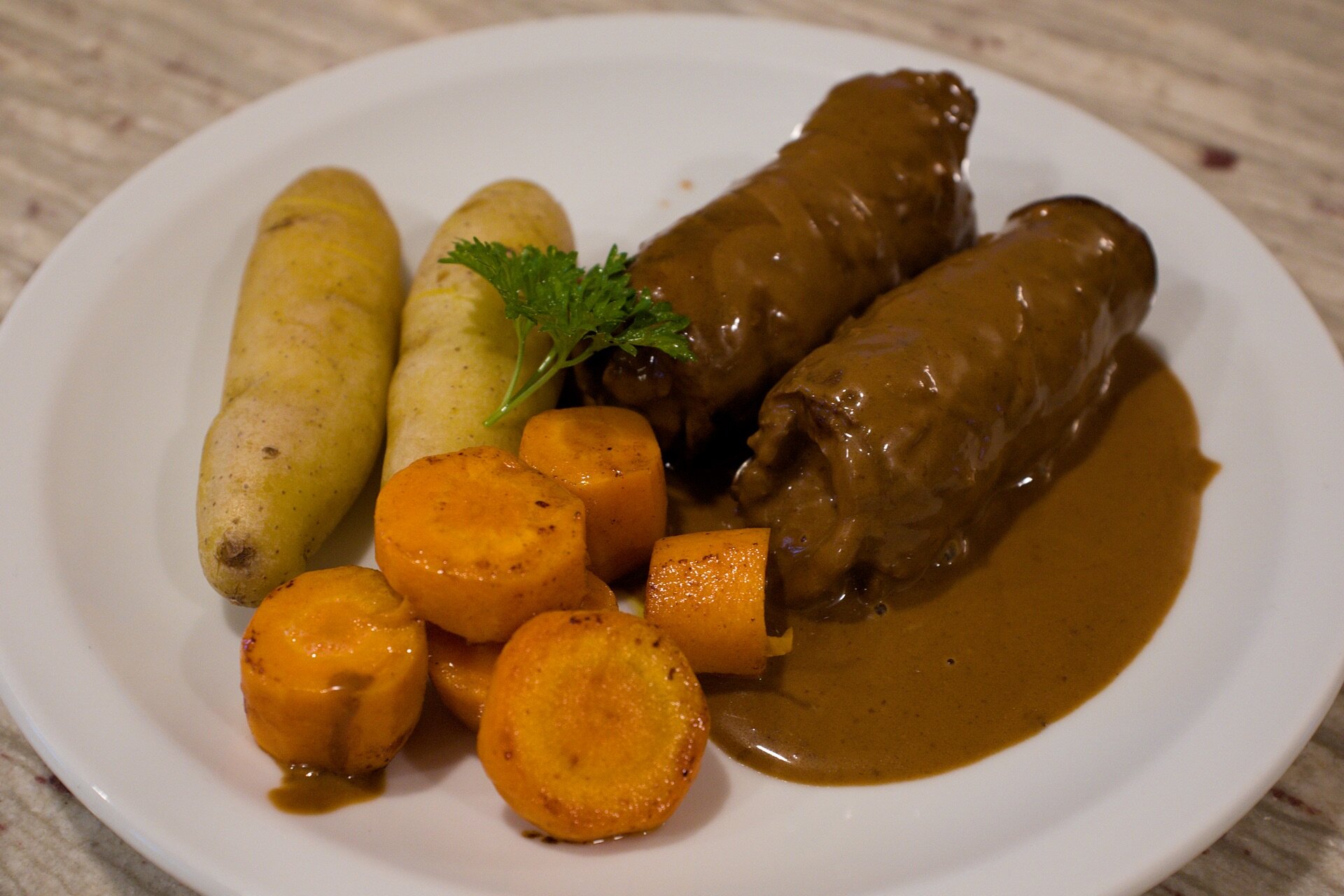
Classic Boneless Birds.

Classic Boneless Birds.

Boneless Birds is an old Danish classic, that you nowadays would call mormormad or Grandma food. It’s old school meat and potato food with a brown gravy. It’s a good comfort food on the heavier side. I served a side of lightly roasted carrots and some boiled fingerling potatoes along side, but other crispy vegetables and maybe a crisp salad would work too. But I still make this dish during the fall or winter months.

When my mom made it she used a piece of smoked speck instead of bacon, making the dish take a more smoky note. As a child the I really disliked the fatty piece of speck. Later she started using a thick piece of bacon, and the dish became more pleasing to me.

The name is kinda weird, but similar dishes, stuffed veal or beef, is known in France and England, where they are called headless birds or veal birds. And maybe beef were more common and cheaper compared to veal, so maybe that’s why veal birds became a beef dish.

I was lucky to get hold of a slap of nicely smoked bacon in the store, making me able to cut some thick slices that I cut into sticks, to roll into the beef. I have made a boneless bird dish earlier, but back then I used a smoked Gouda cheese for a more updated version.

Serves 4.

Ingredients:

  • 4-6 slices of beef scallopini (thin slices of skirt steak)

  • 4-6 thick slices of smoked bacon, cut into sticks the size of string cheese

  • ½ medium onion, grated

  • salt and pepper for seasoning

  • 300 ml (1¼ cup) beef stock

  • 3 bay leaves

  • 200 ml (¾ cup) heavy whipping cream

  • gravy browning

  • gravy thickening (shake to mix some milk + 3 tablespoons flour+ pinch salt)

Directions:

Season the steak slices generously on both sides with salt and pepper.

Take a strip of the steak and lay it with the short side towards you. Place 1-2 sticks of bacon and about a teaspoon grated onion in one end, roll the steak up over the filling, securing it with a toothpick or trussing layers along the length of the roll. Repeat with the remaining meat slices.

Brown the rolls on all sides in a large sauté pan, making sure not to crowd the pan. Crowding the pan will boil the meat instead of searing. Add beef stock and bay leaves to the pan, and turn down the heat. Let the rolls cook on a low simmer for about 1 hour, until the meat is cooked tender. Remove the steak rolls from the pan, and add cream to the drippings/sauce. Let the sauce cook to a boil, and add the thickening and let it cook for a few minutes to remove the taste of flour. Season the sauce with salt and pepper, and add gravy browning to get a deep brown color. Place the rolls back in the pan, covering them with the sauce. Serve immediately with boiled or mashed potatoes.

Enjoy!

Medisterpølse - Danish Pork Sausage

Christmas, Dinner, Meats, Pork, techniqueTove Balle-Pedersen5 Comments
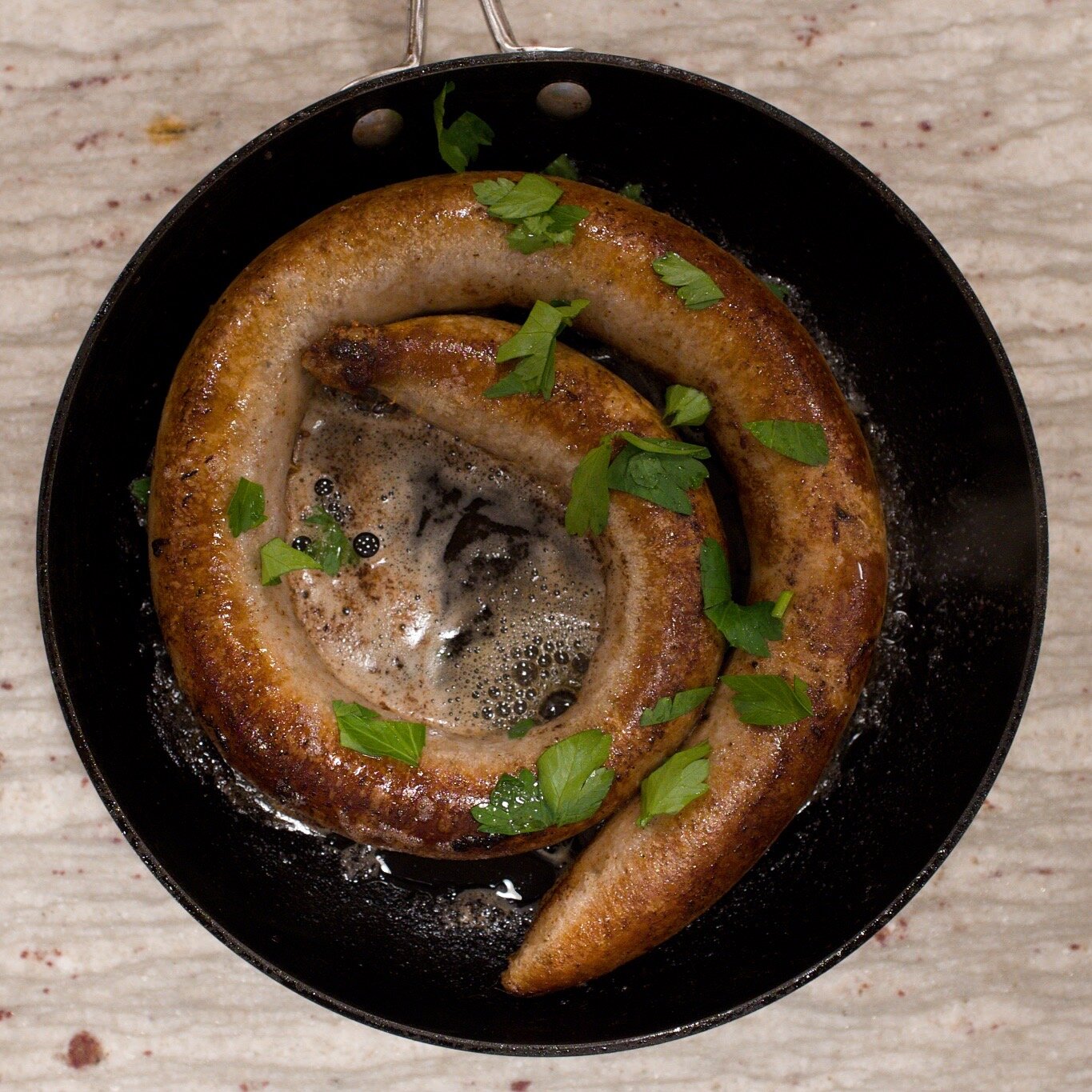
Fried Medisterpølse - Danish Pork Sausage

Fried Medisterpølse - Danish Pork Sausage

Happy First Friday in December. I better start upping my game. Normally I get stuff ready for the blog for December. But this year have been different. Somehow the holidays sneaked up on me - again. But this time we have guest staying here for the past few weeks. So yet again I’m late to the Christmas preparations. But I will be posting christmasy stuff as I get to it.This medisterpølse have been on my blog - to-do list for the longest time. So with this happy December from me to you. 🎄

Medisterpølse/julemedister/christmas medister or Danish pork sausage is something I had very often for weeknight dinners. I was easy to make, and its was on the cheaper end of meats. During November and December the sausage get another seasoning, adding cloves making it more christmasy. This is what I was aiming for here, and I think I’ve succeeded.

Christmas medister is served warm on an open-faced sandwich with pickled red cabbage on Danish rye bread at Danish Christmas luncheons.

Making sausages is a labor entensive process, but the final product is well worth it. Another pro is that you know what's in the sausage.

Makes 3-4 medisterpølser.

Ingredients:

  • 1 kg (2¼ pound) pork (could be a cheaper cut like shoulder)

  • 200 g (½ pound) fatty pork belly

  • 1 onion

  • 1¼ teaspoon salt

  • 1 teaspoon ground cloves

  • 1 teaspoon ground nutmeg

  • 2 teaspoons ground allspice

  • ½-1 teaspoon fresh ground black pepper

  • 3 tablespoons potato starch

  • 2 egg whites

  • about 300 ml chicken stock, ice cold

  • 2-3 meter (yards) sausage casing.

Directions:

Make sure that all your ingredients are cold.

Cut meat, pork belly and onion in pieces that can go into the meat grinder. Grind it all 2 time on the corse setting. Add all the spices, potato starch and egg whites and mix it well. Start adding the cold chicken stock a little at a time. You want the mixture to be soft but by no means runny.  Put the mixture into the refrigerator to rest for 30-40 minutes. 

Rinse the casings in plenty of cold running water. Let tap water run through the casing. This way you’ll fine any holes in the casing. 

Take a little dollop of the mixture and fry it on a small skillet, and tast it, when its cooked completely. This way you can taste the mixture, without tasting the raw meat. Season the mixture with salt, pepper and other spices.

Use a sausage filler to fill up the casing. There are many different model on the marked, but follow the instructions for the one you have. 

But here is some general TIPS:

  • Use nozzle that fits your casings. 

  • Wet the tip of the nozzle with a tiny amount of meat mixture, this will help you getting the casing onto the nozzle. 

  • Put all the casing onto the nozzle

  • let the casing sit close to the tip, this will ease your sausage making.

  • Do NOT tie a knot on the casing, this will just trap a lot of air.

  • Gently pull and squeeze the casing while filling it with the meat mixture.

  • Do NOT fill the casing too much, you are aiming for a soft sausage, the mixture will expand when heated.

Traditionally medisterpølse is made as one big sausage, but of course you can make smaller sausage links. Let the sausage rest for about 30 minutes in the refrigerator before cooking.

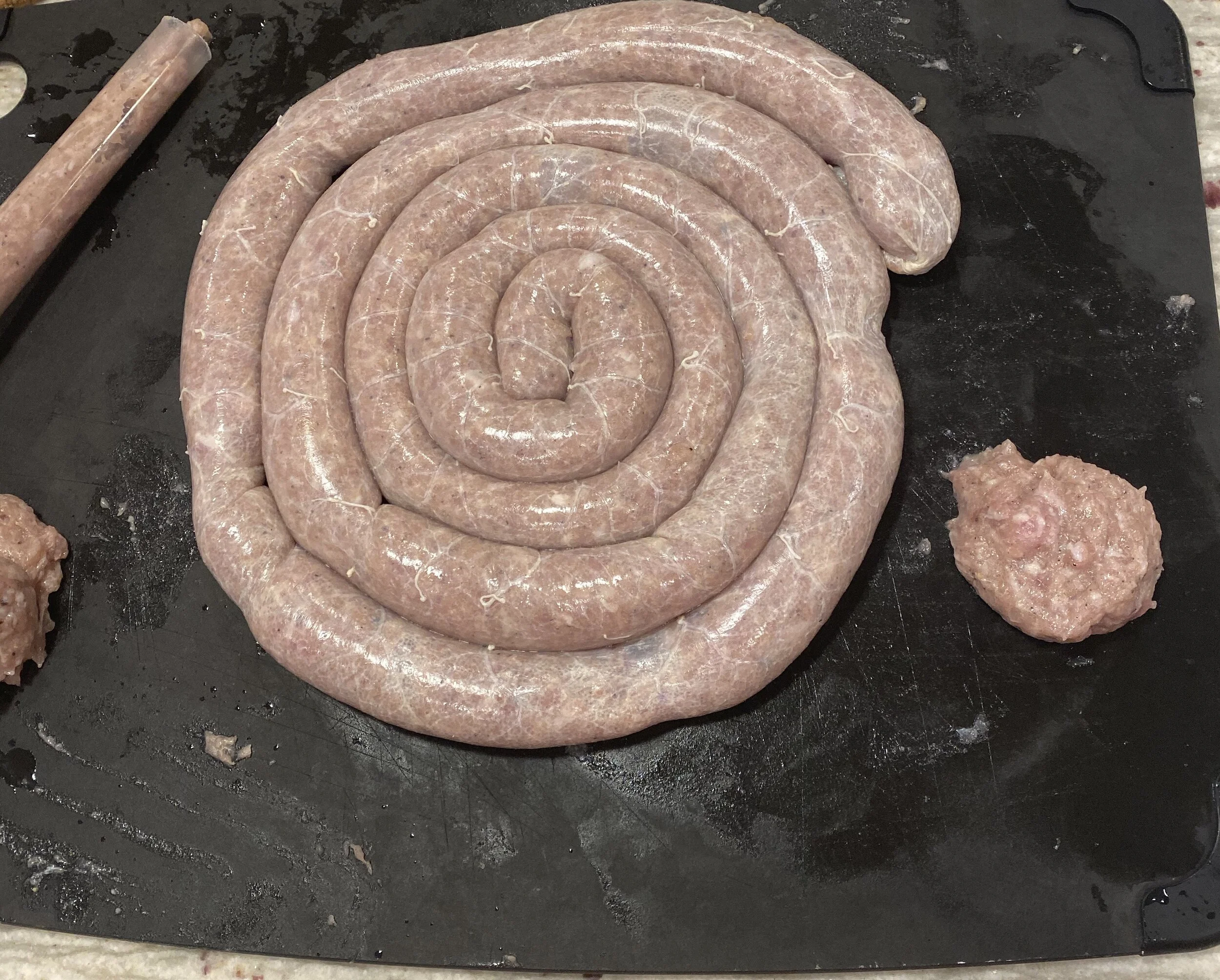
Raw Merdisterpølse - Danish Pork Sausage

Raw Merdisterpølse - Danish Pork Sausage

How to cook a medisterpølse? This is a matter og taste or believes. Some would boil or lite simmer the sausage for about 10 minutes before pan-frying it. My mom never did that. She pan-fried it directly, and it worked just fine. The casing rarely split open.

I pan-fried it directly in butter on medium heat for 15-18 minutes until fully cooked, turnip the sausage a few times.

Another option is to put some water and butter in the pan, and place the raw sausage in the pan and then heat the whole thing up. Turning the sausage ones before the water evaporate, and the frying starts. This way you are pre-boiling and frying the sausage in 1 step, and no need for additional pots and pans.

Serve medisterpølse/pork sausage with boiled potatoes, pickled red cabbage and maybe even some pan-gravy. (Pan-gravy is made in the pan where you cooked the sausage, by adding some stock (water used to boil potatoes) and some milk/cream, then thickend, seasoned and colored with gravy browning).

Enjoy!

Millionbøf - Million Beef

Beef, Dinner, MeatsTove Balle-Pedersen1 Comment
Millionbøf - Million Beef

Millionbøf - Million Beef

Millionbøf can be translated to a million steaks or beef. But its roughly a danish bolognese, without the tomatoes and only seasoned with salt and pepper. Generally oldschool Danish food is kinda bland. We didn't use many spices or herbs. Danes are basically meat and potatoes people. Well a bit more potatoes than meat, because the potatoes were inexpensive. Nowadays the Danes eat a lot of meat. But like everyone else that is changing again. The food trends in Denmark are to eat more local produce and less meats.

Millionbøf had a lot of names. Tusindbøf (thousand beef) and væltet lokum (tipped toilet 😳) is coming to mind. But it’s actually quite tasty in contrast to the nasty name. Growing up we had millionbøf regularly, it’s an easy weeknight dinner. Normally we would get it with mashed potatoes and pickled beets. But it’s not uncommon to serve it with pasta and pickled cucumber or Danish cucumber salad. This time I added some brussel sprouts to my boiling potatoes the last 5-10 minutes. I chopped them and added them to the mashed potatoes, giving it some texture.

Serves 4-6.

Ingredients:

  • 1 tablespoon butter

  • 400 g ground beef (about 1 pound)

  • 2 yellow onions, chopped

  • 3 bay leaves

  • 400 ml beef stock

  • salt & pepper to taste

  • kulør (gravy browning)

For thickening:

  • 100 ml water (mix with the flour, to thicken the sauce)

  • 2 tablespoons all-purpose flour

  • a pinch of salt

Directions:

Saute the onions in the golden brown butter. When they start taking color, add the ground beef, and brown it well. This is an important process to create flavor. Add beef stock, bay leaves and pepper. Let it simmer for about 20-30 minutes with the lid on. Stir occasional. Mix the water and flour and add some of it in the million beef while whisking, add more until you have the desired consistency; not to runny and not too thick. Season the million beef with salt and pepper, and add the gravy browning.

Serve the million beef with masshed potatoes and pickled beets.

Enjoy!